OEM vs Private Label: What’s the Difference?
OEM/ODM vs Private Label · 9 min read
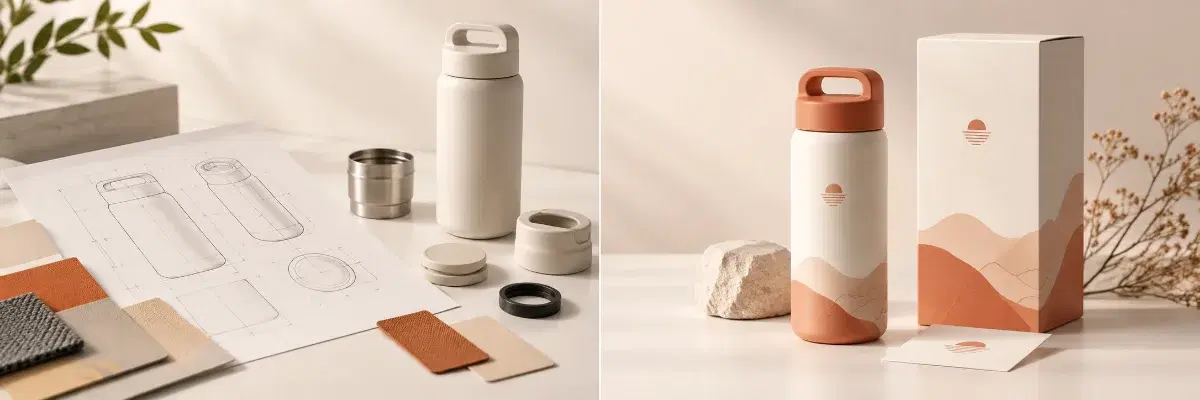
OEM manufacturing creates a product based on your brand’s specifications, while private label manufacturing starts with an existing product that you customize with your branding or selected features.
At a glance
- Your specifications
- Manufacturer develops
- Your product
With OEM manufacturing, a manufacturer produces a product based on your brand’s specifications, design, or product requirements.
This gives you more control over the final product but usually requires more development work.
- Existing product
- Select customization options
- Your branded product
With private label manufacturing, you typically start with an existing product from a manufacturer and customize elements such as the branding, packaging, colors, or selected features.
The right option depends on how unique you need the product to be, your budget, timeline, and how quickly you want to enter the market.
UniquenessBudgetTimelineSpeed to market
What Is OEM Manufacturing?
OEM, or Original Equipment Manufacturer, refers to a manufacturer that produces a product based on specifications or requirements provided by another company.
For brands, OEM manufacturing is often used when the product needs a higher level of customization.
This can include changes to:
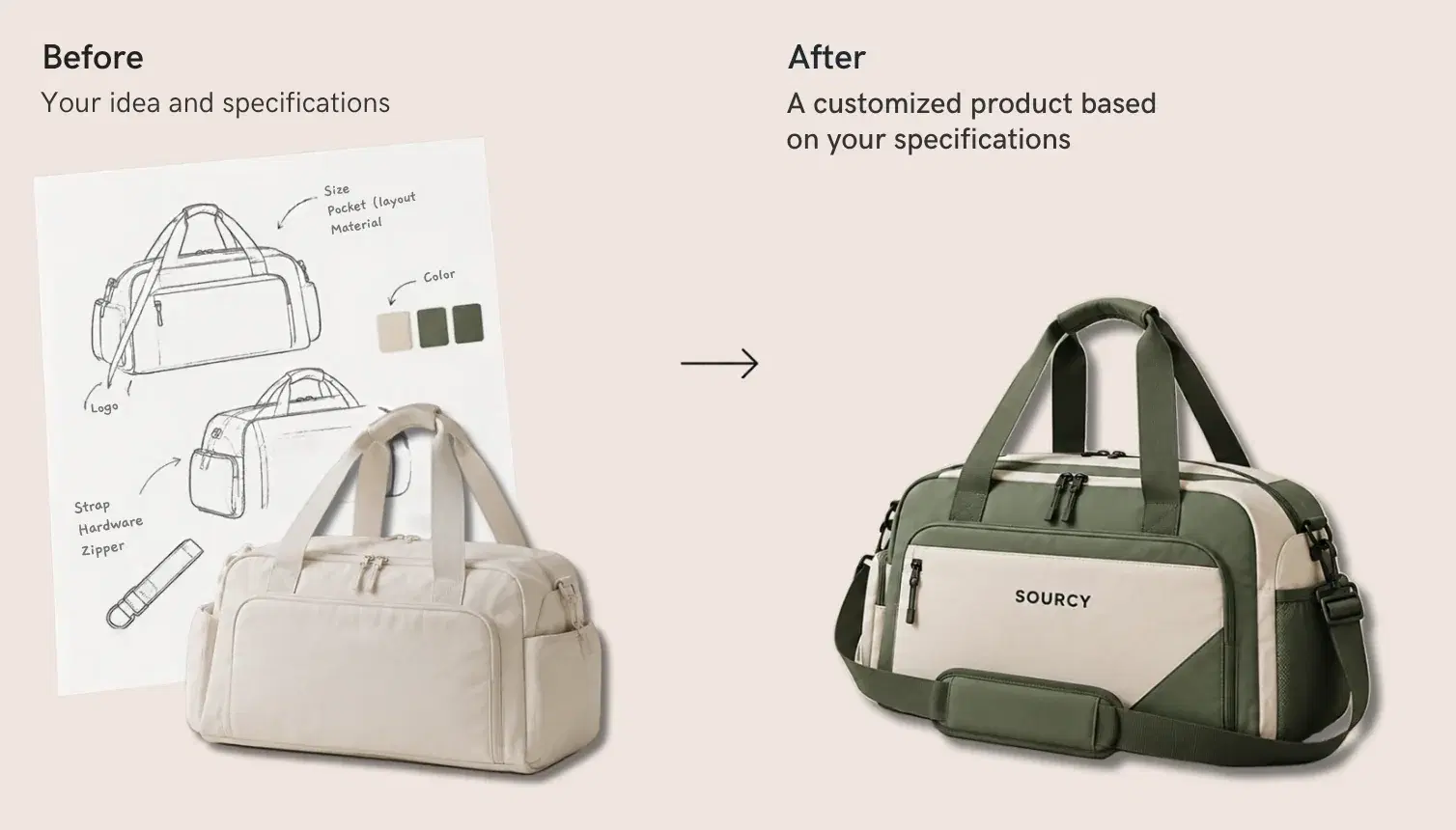
For example, a sports brand developing a new pickleball bag may provide requirements for the bag size, materials, pocket layout, straps, hardware, and logo placement.
The manufacturer then develops the product according to those specifications.
Because more product development is involved, OEM projects may require additional sampling, testing, tooling, higher MOQs, or longer lead times depending on the product.
- Idea
- Specs
- Manufacturer
Have a custom product idea?
Turn your requirements into a sourcing brief and find manufacturers that can build to your specifications.
Start an OEM Sourcing RequestWhat Is Private Label Manufacturing?
Private label manufacturing usually involves selecting an existing or manufacturer developed product and selling it under your own brand.
Instead of developing the entire product from scratch, the brand may customize certain elements such as:
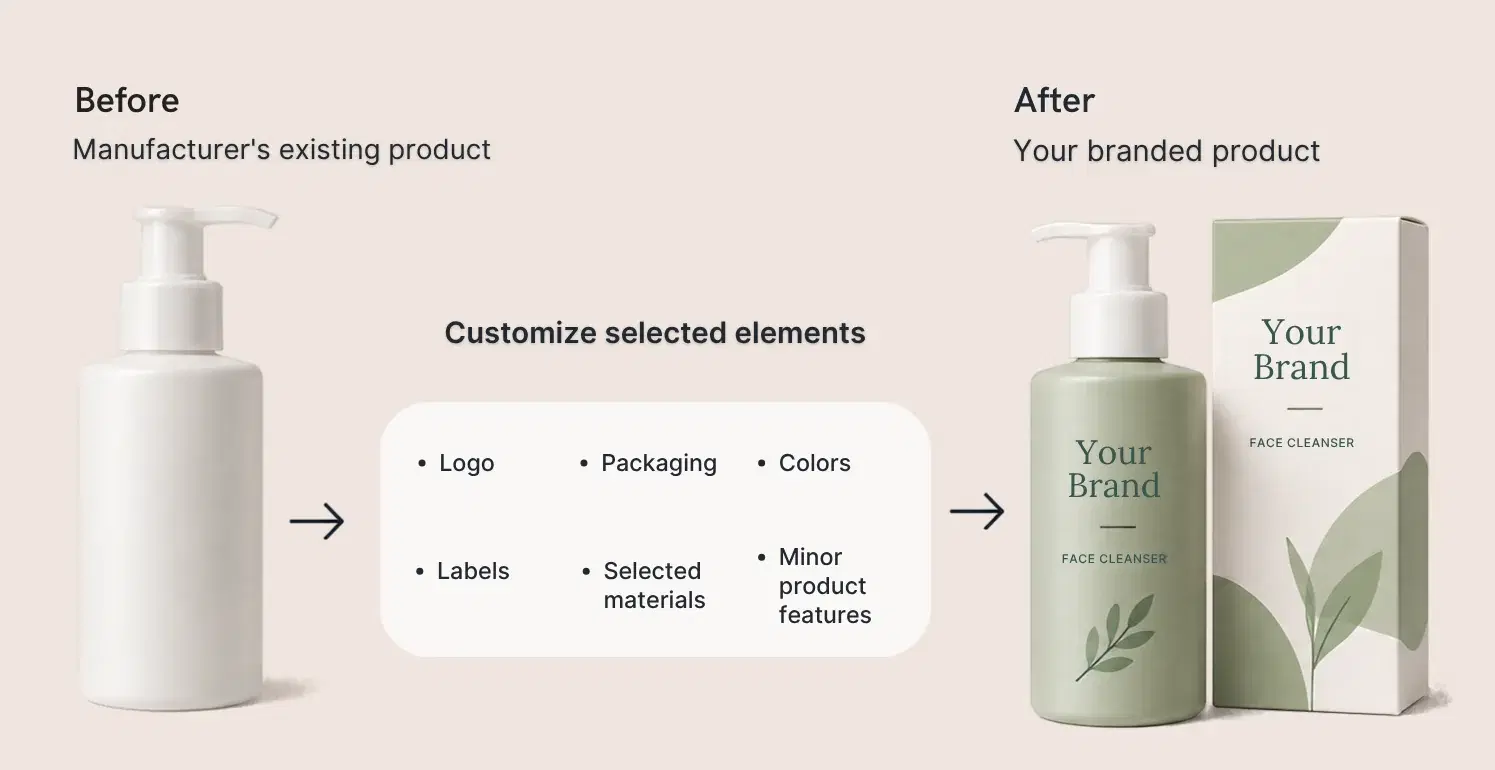
For example, a skincare brand might choose an existing bottle, packaging format, or base product offered by a manufacturer and customize it with its own branding.
Private label can reduce the amount of product development needed, making it useful for brands that want to launch products faster or test a new category before investing in a highly customized product.
If you are building an Amazon product line, see our guide on how to source products to sell on Amazon.
Private label products have also become increasingly significant in retail. In the U.S., store brand sales reached a record $282.8 billion in 2025, while dollar sales grew 3.3%, compared with 1.2% for national brands. PLMA
- Branding
- Packaging
- Colors
- Features
Want to launch without starting from scratch?
Explore existing products that can be customized with your branding, packaging, colors, and selected features.
OEM vs Private Label: Key Differences
The biggest difference between OEM and private label is how much control the brand has over product development.
| Factor | OEM | Private Label |
|---|---|---|
| Product design | Developed around brand requirements | Usually based on an existing product |
| Customization | High | Low to moderate |
| Development time | Usually longer | Usually faster |
| Upfront investment | Often higher | Often lower |
| Sampling | Usually more development rounds | Usually fewer |
| MOQ | May be higher depending on customization | Can be lower depending on supplier |
| Product differentiation | Higher | Lower |
| Speed to market | Slower | Faster |
| Best suited for | Brands building differentiated products | Brands testing or launching products quickly |
These are general differences rather than fixed rules.
MOQ, pricing, customization, and production timelines depend heavily on the product category and manufacturer.
OEM vs Private Label vs White Label
Private label and white label are often used interchangeably, but they can describe slightly different sourcing models.
OEM
The product is developed according to the brand’s own requirements.
This generally offers the highest level of customization and product differentiation.
Private Label
The brand typically starts with an existing manufacturer product but makes selected changes to create a more branded offering.
There may be customization to packaging, materials, colors, formulation, or product features depending on the supplier.
White Label
White label usually involves a more standardized product that can be sold by multiple companies under different brand names.
Customization is normally limited mainly to branding and packaging.
A simple way to think about the difference is:
- White LabelBrand an existing product
- Private LabelCustomize an existing product
- OEMDevelop the product
In practice, manufacturers may use these terms differently, so brands should always confirm exactly what can and cannot be customized before placing an order.
How Does the Sourcing Process Differ?
The main difference is that OEM generally requires more product development, while private label focuses more on product selection and customization.
The sourcing process can also look different depending on the manufacturing model.
If you are new to sourcing, our guide to sourcing in supply chain management explains how supplier selection, negotiation, quality assurance, and order fulfillment fit together.
OEM Sourcing Process
A typical OEM project may involve:
Define the product
Create clear specifications covering materials, dimensions, features, functions, packaging, and quality requirements.
Find suitable manufacturers
Look for suppliers with the equipment, experience, certifications, and manufacturing capabilities required for the product.
Develop samples
The manufacturer creates samples based on the specifications. Several revisions may be required before the product is approved.
Confirm production requirements
Agree on MOQ, pricing, production timeline, quality standards, packaging, and payment terms.
Begin production
Once the sample and specifications are approved, the supplier moves into mass production.
Private Label Sourcing Process
Private label sourcing can be simpler:
Select an existing product
Identify products that already meet most of your requirements.
Confirm customization options
Check what can be changed, such as logo, packaging, colors, materials, or product features.
Request samples
Evaluate the product quality and customized elements before production.
Confirm MOQ and pricing
Different customization options may change the MOQ and unit cost.
Move into production
Once the final sample is approved, production can begin.
- Brief
- Suppliers
- Samples
- Production
From product requirements to production
Sourcy helps manage the sourcing steps between your idea and production.
Which Is Better for Your Brand?
Neither model is automatically better.
The right choice depends on what your brand is trying to achieve.
Which should I choose?
What matters more for this product?
- A unique product, differentiation and control over materials and featuresOEM
- A faster launch, testing a category and less development workPrivate Label
Choose OEM if:
- You have a specific or unique product idea
- Product differentiation is important
- You need significant customization
- You want more control over materials and features
- You are prepared for a longer development process
OEM may make more sense for brands building a product that is intended to stand apart from existing options in the market.
Choose Private Label if:
- You want to launch faster
- You are testing a new product category
- You do not need a completely unique product
- You want to reduce product development work
- Branding and selected customization are enough
Private label can be useful for growing brands that want to validate demand before committing more resources to custom product development.
What Should You Compare Before Choosing?
Before deciding between OEM and private label, brands should look beyond unit price.
Consider:
Customization
How different does the product need to be from what already exists?
MOQ
A highly customized product may require larger minimum orders because manufacturers need to set up materials, tooling, or production specifically for the project.
If MOQ is new to you, read our guide to what MOQ means and how to approach it when sourcing.
Development Cost
OEM projects may involve additional costs for sampling, molds, tooling, testing, or product development.
Lead Time
An existing private label product can generally move into production faster than a product that needs to be developed from specifications.
Quality Requirements
Whether you choose OEM or private label, define your quality expectations before production.
Samples, specifications, inspections, and clear acceptance criteria can help reduce misunderstandings later.
Supplier Capability
A low quotation does not necessarily mean a supplier is suitable.
Supplier evaluation should go beyond the quotation. See what our team looks for before approving a supplier.
Common Mistakes When Choosing OEM or Private Label
One common mistake is choosing a manufacturing model based only on cost.
A cheaper product may not be the better option if it does not meet your quality, customization, or brand requirements.
Other common mistakes include:
- Starting without clear product specifications
- Assuming every manufacturer uses “OEM” and “private label” the same way
- Choosing a supplier based only on unit price
- Not confirming customization limitations
- Underestimating sampling and development time
- Ignoring MOQ and inventory requirements
- Moving into production before approving a final sample
A clear sourcing brief can make it much easier to compare suppliers on the same requirements.
OEM or Private Label: The Bottom Line
The main difference between OEM and private label comes down to product development and customization.
OEM manufacturing gives brands more control over the product and is better suited to products that require greater differentiation.
Private label manufacturing starts closer to an existing product, making it a faster and often simpler way to introduce a product under your own brand.
Before choosing between them, consider your:
The goal is not simply to choose OEM or private label.
It is to choose the sourcing approach and the supplier that best fits the product you are trying to build.
Frequently Asked Questions
What is the main difference between OEM and private label?
The main difference is the level of product development and customization.
OEM usually involves manufacturing a product based on a brand’s own specifications or design requirements. Private label usually starts with an existing product that is customized with branding, packaging, colors, or selected features.
Is private label the same as OEM?
No. They are related manufacturing models, but they are not the same.
OEM generally gives the brand more control over product design and specifications, while private label usually involves less product development because the manufacturer already has an existing product or base design.
Is white label the same as private label?
Not exactly.
White label products are usually standardized products that can be sold by multiple brands with different branding.
Private label products may allow more customization, such as packaging, colors, materials, or selected product features.
However, manufacturers may use these terms differently, so brands should always confirm what level of customization is actually available.
Is OEM more expensive than private label?
OEM can be more expensive because it may require additional product development, sampling, tooling, testing, or custom materials.
Private label can require less upfront development because the manufacturer already has an existing product.
However, actual cost depends on the product, supplier, MOQ, customization, and production requirements.
Does OEM usually have a higher MOQ?
Often, but not always.
OEM projects may require higher MOQs when manufacturers need to purchase custom materials, create tooling, or set up production specifically for the product.
Private label products may offer lower MOQs because the manufacturer is already producing a similar product.
Which is better for a new brand: OEM or private label?
Private label may be more suitable for new brands that want to launch quickly, test demand, or reduce product development work.
OEM may be more suitable when a brand has a unique product concept and needs greater control over features, materials, or design.
The better option depends on the brand’s budget, timeline, product requirements, and long term strategy.
How do I find an OEM or private label manufacturer?
Start by creating a clear sourcing brief that includes:
- Product specifications
- Materials
- Dimensions
- Customization requirements
- Target quantity
- Packaging
- Quality requirements
- Target timeline
Then compare suppliers based on more than price.
Look at manufacturing experience, capabilities, MOQ, quality systems, communication, lead times, and whether the supplier can meet your specific requirements.
Can a private label product be customized?
Yes, but the level of customization depends on the supplier.
Private label products may allow changes to:
- Logo
- Packaging
- Colors
- Labels
- Materials
- Selected product features
If you need major changes to the product structure or functionality, OEM may be a better fit.
How long does OEM manufacturing take?
OEM manufacturing usually takes longer than private label because the product may need to go through development, sampling, testing, revisions, and production setup.
The actual timeline depends on the complexity of the product, supplier capability, number of sample rounds, and production requirements.
Ready to turn your product idea into something real?
Whether you need OEM development or a private label product, Sourcy can help you move from product requirements to supplier sourcing, samples, quality control and delivery.
Start Your Sourcing Request