Best Private Label Skincare Manufacturers: How to Compare Suppliers
OEM/ODM & Private Label · 9 min read
Choosing the best private label skincare manufacturers requires more than comparing product catalogs or unit prices. The right manufacturer should match your formulation needs, minimum order quantity (MOQ), packaging requirements, quality standards, and target market.
This guide compares private label skincare manufacturers, explains their manufacturing capabilities, and provides a practical checklist to help you evaluate suppliers before requesting quotations.
Whether you're launching your first skincare brand or expanding an existing product line, understanding these differences can help you choose a suitable manufacturing partner.
Ready to Launch Your Own Skincare Brand?
Finding a manufacturer is only the beginning. Sourcy helps businesses explore suitable skincare manufacturing options, compare supplier requirements, and coordinate product sourcing.
What Are Private Label Skincare Manufacturers?
Private label skincare manufacturers produce skincare products that businesses can sell under their own brands. Depending on their capabilities, they may offer ready-made formulations, semi-custom products, or fully customized skincare development.
However, not every manufacturer supports the same product categories, formulation complexity, packaging options, or minimum order quantities.
Best Private Label Skincare Manufacturers to Consider
The manufacturers below are examples of established providers worth evaluating. They are not ranked by independently tested product quality, and suitability depends on your requirements.
Vitelle Labs — Professional Skincare and Private Label Manufacturing
Location Vancouver, Canada
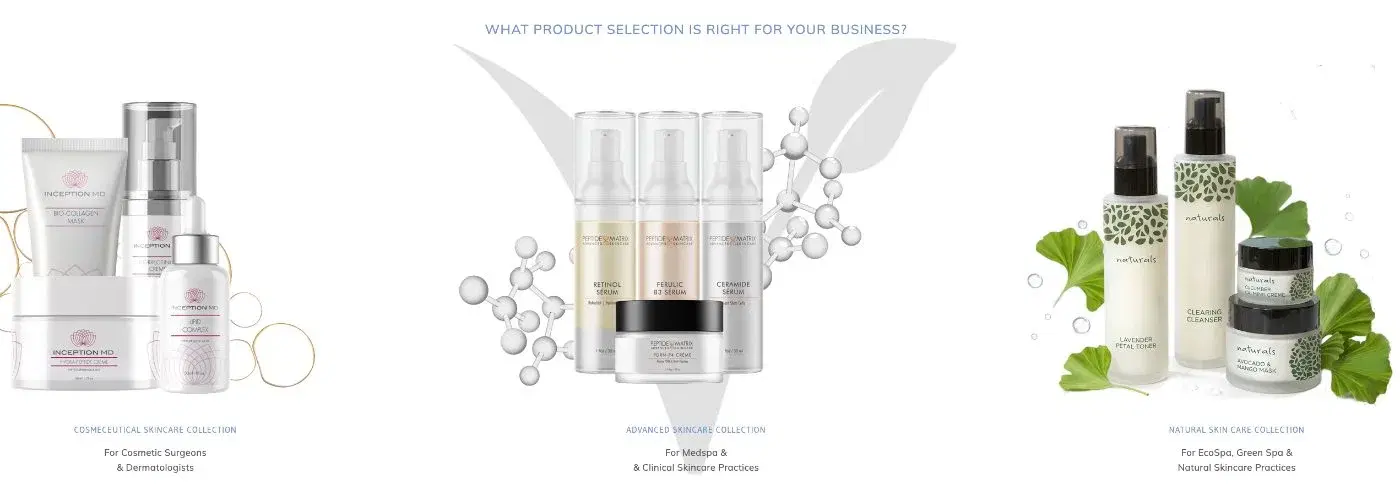
Vitelle Labs specializes in private label and contract manufacturing for professional skincare brands, including spas, dermatology practices, and aesthetic businesses.
The manufacturer offers established skincare collections alongside custom product formulation services, with a focus on professional skincare and plant-derived ingredients.
Key manufacturing capabilities:
- Ready-made private label skincare collections
- Custom formulation and contract manufacturing
- Small-batch manufacturing
- Packaging selection and branded product labeling
Best suited for
Professional skincare brands, medical spas, and beauty businesses looking for established formulations with customization options.
MOQ
Custom formulation minimums start at 20 litres, according to its website. Confirm the applicable MOQ for your specific product and packaging requirements.
What buyers should check
Available formulation options, product testing documentation, packaging customization, and total production costs.
Pravada Private Label — Flexible Skincare Formulation Options
Location Florida, United States
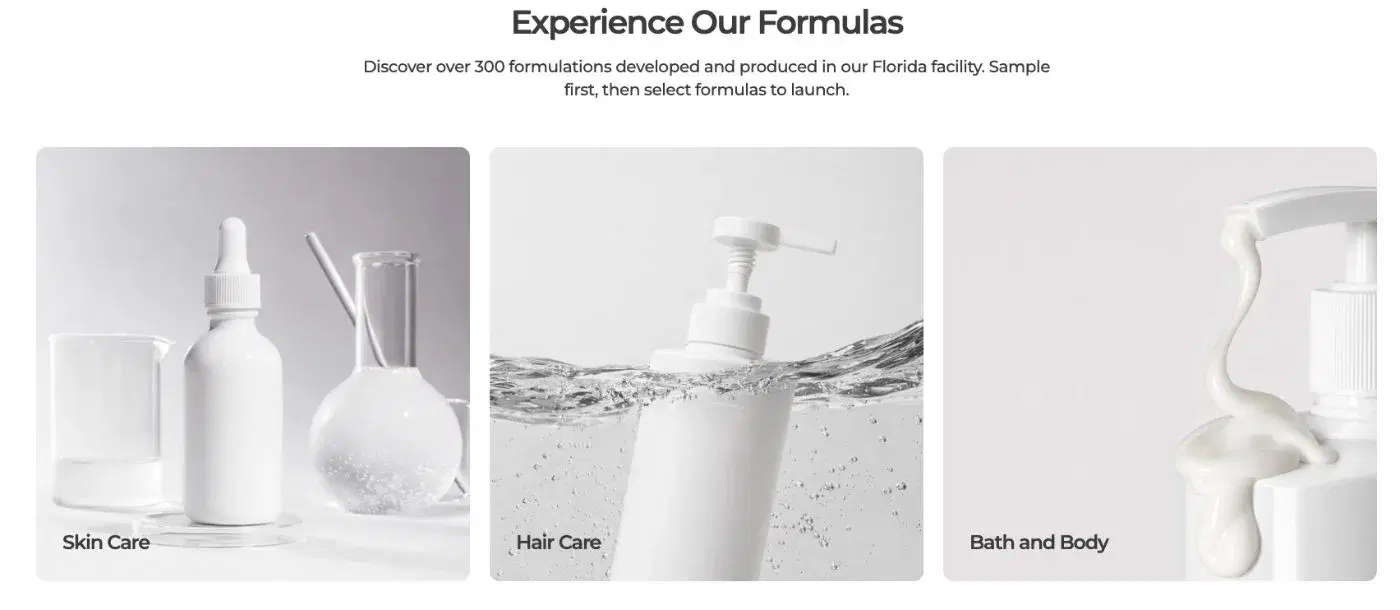
Pravada Private Label offers skincare, haircare, and body care manufacturing services, including ready-made private label products, semi-custom formulations, and fully customized product development.
Its manufacturing programs allow brands to choose different levels of customization depending on their product requirements and order quantities.
Key manufacturing capabilities:
- Over 300 existing skincare and haircare formulations
- Ready-made private label products
- Semi-custom formulations with selected ingredient modifications
- Fully custom formulation development through its in-house R&D team
- Product filling, labeling, and manufacturing
Best suited for
Startups and growing skincare brands looking for flexible formulation options, from ready-made products to fully customized skincare.
MOQ
Published minimums start at 50 units per SKU for private label, 250 units for semi-custom, and 2,500 units for custom formulations.
What buyers should check
Formulation development costs, ingredient customization limitations, testing documentation, packaging options, and production lead times.
RainShadow Labs — Stock and Custom Skincare Formulations
Location Oregon, United States
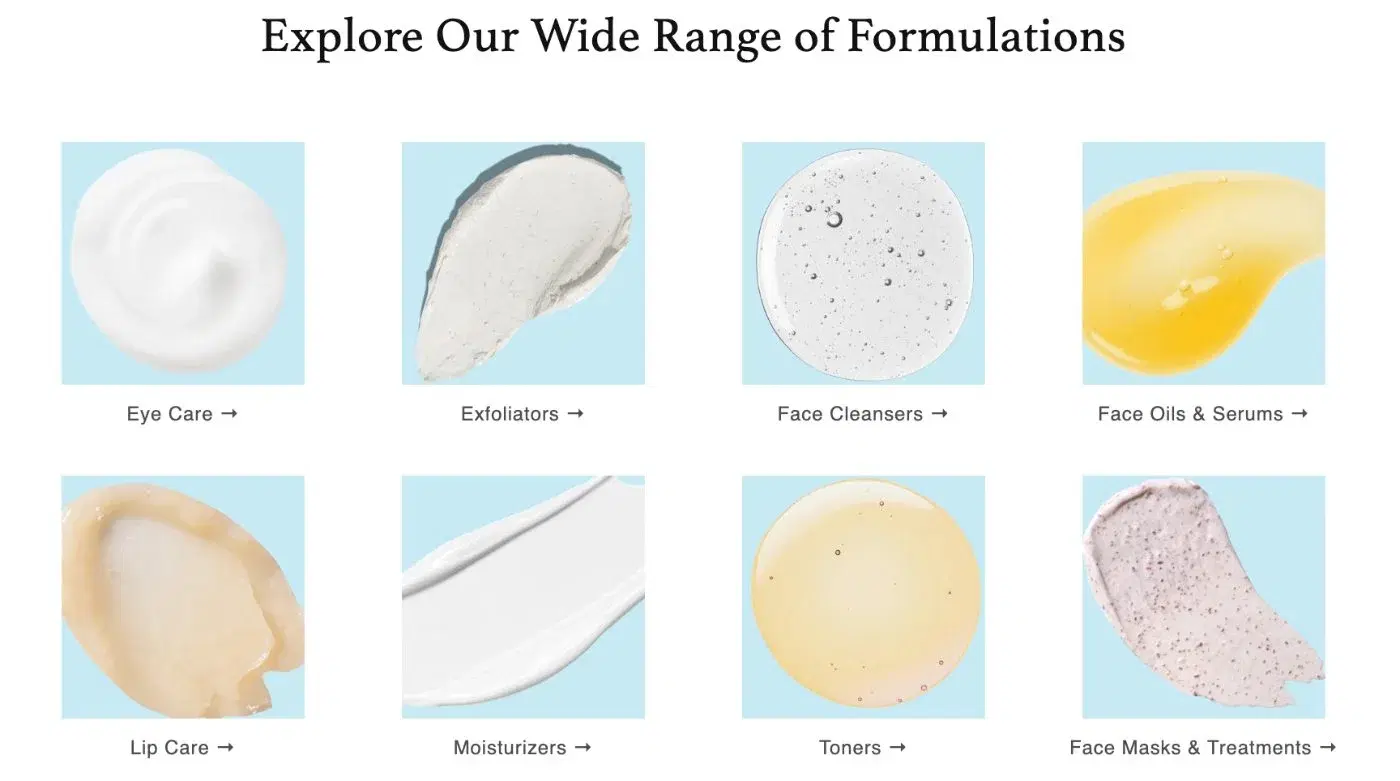
RainShadow Labs provides private label skincare, bulk formulations, and custom manufacturing services for beauty brands, retailers, and spas.
The manufacturer offers existing stock formulations, semi-custom modifications, and fully custom product development.
Key manufacturing capabilities:
- More than 100 stock skincare formulations
- Ready-made private label and bulk skincare products
- Semi-custom ingredient and fragrance modifications
- Custom formulation development through its R&D team
- Product filling, stability testing, and microbiological testing
Best suited for
Skincare startups and established brands comparing ready-made formulations, bulk purchasing, and customized product development.
MOQ
Stock private label filling starts at 10 gallons, while custom formulations generally require 25 gallons. Buy Direct stock products have no minimum order requirement.
What buyers should check
Packaging sourcing responsibilities, formula development fees, product testing documentation, batch sizes, and production lead times.
Quick Manufacturer Comparison
| Manufacturer | Location | Manufacturing options | Published MOQ | Best suited for |
|---|---|---|---|---|
| Vitelle Labs | Canada | Private label, custom formulation | Custom from 20 L | Professional skincare brands and spas |
| Pravada Private Label | USA | Private label, semi-custom, full custom | 50 / 250 / 2,500 units per SKU, by program | Startups and growing brands |
| RainShadow Labs | USA | Stock, semi-custom, custom | Stock filling from 10 gal; custom from 25 gal | Brands comparing stock and custom formulations |
How to use this comparison: Start by shortlisting manufacturers based on your product category and formulation requirements. Then request comparable quotations using the same product specifications, estimated order quantity, packaging requirements, and target market.
Manufacturer capabilities may change, and the comparison above does not represent independently verified supplier performance.
Comparing Multiple Skincare Manufacturers?
Different suppliers may quote different MOQs, formulation fees, and packaging requirements for similar products.
Explore suitable suppliers with Sourcy to compare manufacturing options based on your product brief.
Skincare Manufacturer Comparison Checklist: 7 Things to Verify
Before committing to a private label skincare manufacturer, compare suppliers using the same evaluation criteria.
| Evaluation Criteria | Questions to Ask Manufacturers |
|---|---|
| Formulation capabilities | Do you offer ready-made, semi-custom, or fully custom formulations? |
| Minimum order quantity | What is the MOQ per formula, SKU, and packaging variation? |
| Formula ownership | Who owns the final formulation, and is exclusivity available? |
| Product testing | Can you provide stability, microbiological, and packaging compatibility testing records? |
| Quality standards | What GMP practices, certifications, and batch traceability systems are in place? |
| Packaging capabilities | Do you provide filling, labeling, and customized primary and secondary packaging? |
| Production and compliance | What are the estimated lead times, and what documentation is available for the target market? |
Why These Criteria Matter
A manufacturer offering a lower MOQ may be suitable for initial market testing, while a supplier with stronger formulation development capabilities may better support a differentiated skincare brand.
Similarly, two manufacturers may offer comparable unit prices but different testing services, packaging minimums, and production responsibilities.
The goal is not simply to find the cheapest manufacturer, but to identify a supplier whose capabilities match your product and commercial requirements.
Why Choosing the Right Skincare Manufacturer Matters
The global beauty industry continues to grow, creating opportunities for new skincare brands while increasing competition.
McKinsey's 2026 State of Beauty report projects that the global beauty market could reach approximately $590 billion by 2030.
However, market growth alone does not guarantee product success. Brands must evaluate formulation quality, manufacturing consistency, packaging, and supplier reliability to avoid costly production issues.
Choosing a suitable manufacturer can help businesses manage sourcing risks and support long-term product development.
How to Compare Private Label Skincare Manufacturing Costs
Private label skincare manufacturing costs vary depending on formulation complexity, order quantity, packaging requirements, testing, and production location.
When comparing manufacturers, request an itemized quotation covering:
| Cost Component | What to Compare |
|---|---|
| Formula development | One-time development fees, revisions, and ownership terms |
| Sampling | Sample charges and additional revision costs |
| Manufacturing | Unit price at different order quantities |
| Packaging | Bottles, jars, pumps, labels, cartons, and applicable MOQs |
| Testing and documentation | Required product testing and regulatory documentation |
| Shipping and logistics | Freight, duties, and other delivery-related expenses |
A manufacturer offering the lowest unit price may not provide the lowest total project cost. Separate development fees, packaging minimums, or testing charges can significantly affect the final budget.
Need a More Accurate Skincare Manufacturing Quote?
Compare suitable manufacturing options based on your product specifications, preferred ingredients, packaging requirements, and estimated order quantity.
4 Common Mistakes When Comparing Private Label Skincare Manufacturers
1. Assuming All Manufacturers Offer Custom Formulations
Some manufacturers primarily offer existing formulas with limited modifications. Confirm whether the supplier can support your required ingredients, product texture, and performance objectives.
2. Overlooking Formula Ownership and Exclusivity
Custom formulation does not automatically mean your brand owns the formula. Clarify intellectual property ownership, exclusivity, and future manufacturing rights before development begins.
3. Failing to Verify Skincare-Specific Testing
Ask manufacturers about stability testing, microbiological testing, packaging compatibility, and relevant product documentation. The necessary requirements depend on the product and intended market.
4. Comparing Unit Prices Without Packaging and Testing Costs
Two suppliers may quote similar prices but include different services. Request itemized quotations to understand the total cost before selecting a manufacturer.
How Sourcy Helps You Find the Right Skincare Manufacturer
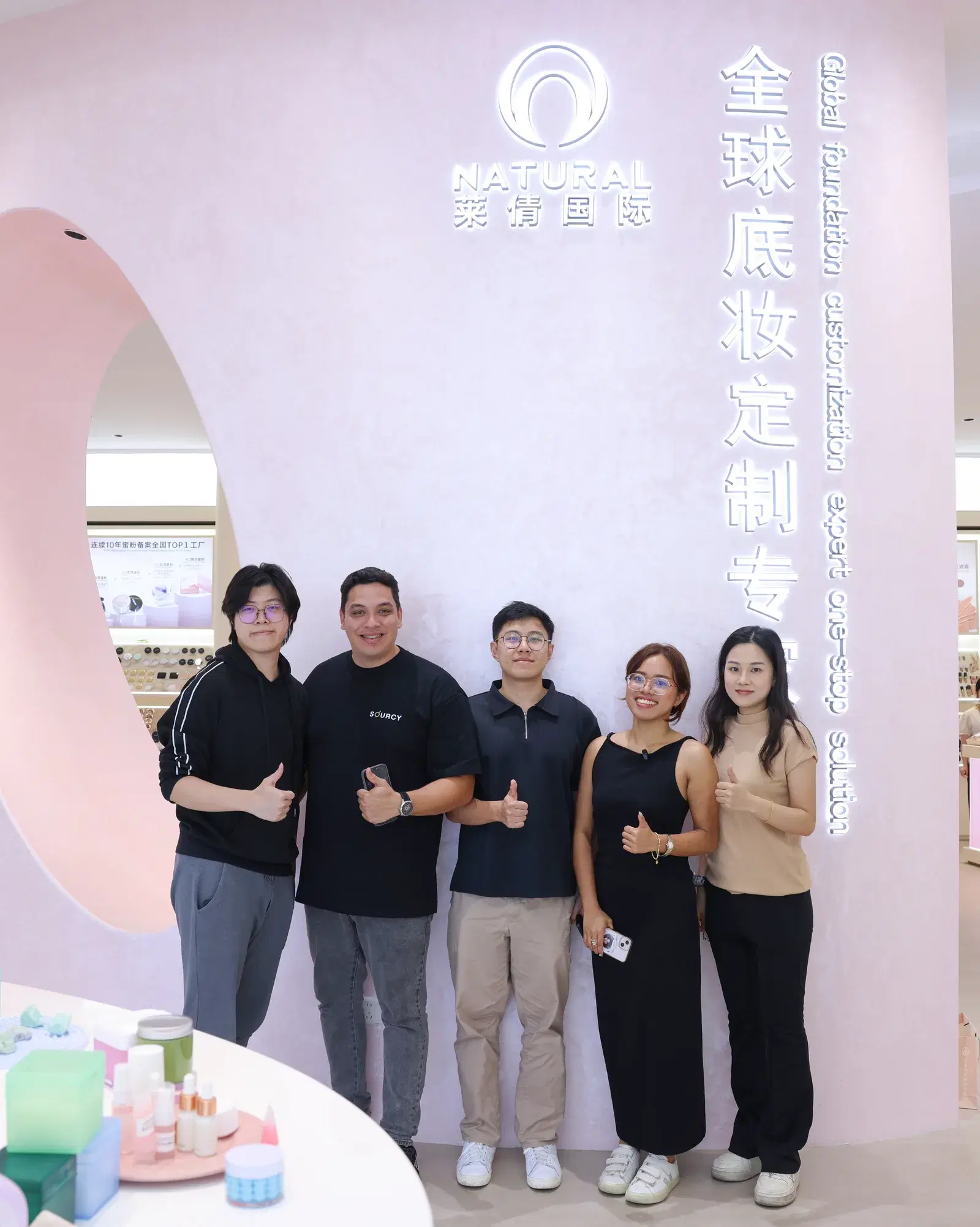
Finding private label skincare manufacturers is only the first step. Comparing formulation capabilities, product specifications, supplier quotations, and production requirements can take time.
Sourcy helps businesses manage the sourcing process from supplier discovery to production and delivery.
Through Sourcy, businesses can:
- Identify suitable manufacturers: Explore sourcing options based on product type, formulation requirements, and order quantity.
- Compare manufacturing quotations: Evaluate supplier options using more consistent product specifications.
- Coordinate sampling: Support sample reviews and product development requirements.
- Verify supplier capabilities: Review relevant manufacturing experience, documentation, and quality expectations.
- Manage the sourcing process: Coordinate production, quality control, and logistics as applicable to the project.
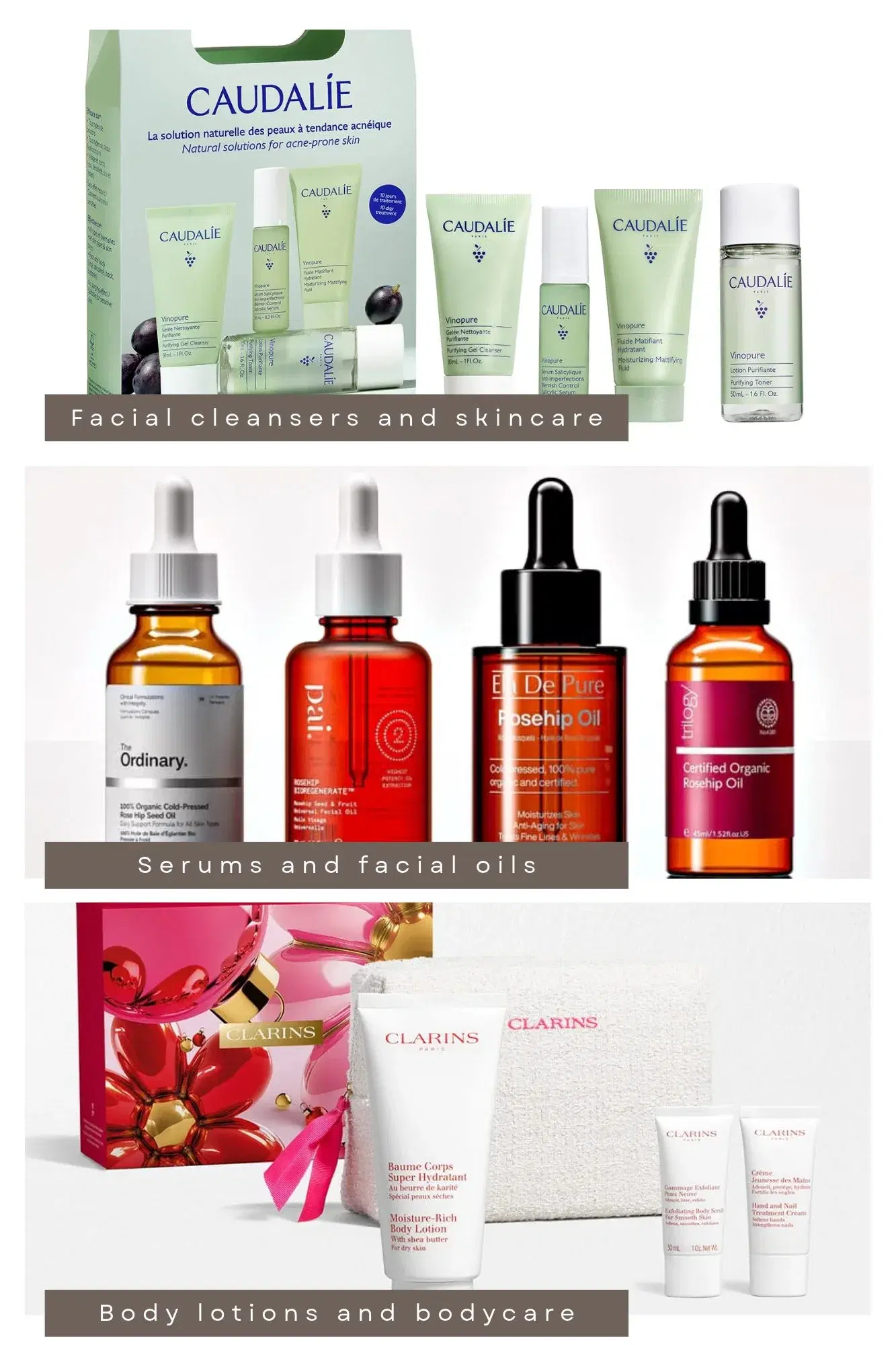
Whether you're sourcing facial cleansers, moisturizers, serums, or body care products, Sourcy helps simplify the journey from product requirements to finished goods.
Ready to Compare Skincare Manufacturers?
Share your skincare product requirements, estimated order quantity, and customization needs to explore suitable sourcing options.
Frequently Asked Questions
What is the best private label skincare manufacturer for a startup?
The best manufacturer depends on your target product, budget, minimum order quantity, and customization needs. Startups may benefit from manufacturers offering existing formulations and manageable order quantities, while brands developing differentiated products may require custom formulation services.
How do I compare private label skincare manufacturers?
Compare manufacturers using consistent criteria, including formulation capabilities, MOQ, testing documentation, packaging options, lead times, and total manufacturing costs. Request itemized quotations based on the same product specifications.
Can private label skincare manufacturers create custom formulas?
Some manufacturers offer only ready-made formulations, while others provide semi-custom and fully customized development. Always confirm the available customization scope and any formula development fees.
What certifications should skincare manufacturers have?
Relevant standards may include cosmetic Good Manufacturing Practices (GMP), such as ISO 22716. However, certification alone does not establish that every product meets the regulatory requirements of its destination market.
Should I choose a local or overseas skincare manufacturer?
Local manufacturers may simplify communication and logistics, while overseas suppliers may offer different formulation capabilities, production capacities, and pricing options. Compare total costs, quality requirements, lead times, and regulatory responsibilities before deciding.
Final Thoughts
Compare formulation capabilities, quality documentation, minimum order requirements, packaging, and commercial terms before committing to production.
Choosing the right private label skincare manufacturer is about finding a partner that can consistently deliver your product specifications, not simply choosing the supplier with the lowest price.
Ready to Turn Your Skincare Idea Into a Product?
Sourcy helps you explore manufacturing options and navigate the sourcing process with greater clarity.