
Manufacturing Lead Time Explained: How Long Does Production Take?
Sourcing Guide · 7–8 min read
Manufacturing lead time is the total time required to prepare, manufacture, and complete a product order, from the agreed starting point to the finished production stage. Depending on the definition used, it may also include order processing and delivery.
For brands sourcing products from manufacturers, the timeline can involve material procurement, production scheduling, assembly, finishing, and quality inspections.
How long production takes depends on the product’s complexity, customization requirements, order quantity, material availability, and factory capacity.
Understanding these stages helps businesses plan product launches, manage inventory, and avoid unexpected delivery delays.
This guide explains how to calculate manufacturing lead time, what affects production timelines, and how to work with manufacturers to improve delivery reliability.
What Is Manufacturing Lead Time?
Manufacturing lead time measures the time needed to complete a manufacturing order.
It is an important planning metric because it helps businesses understand when products will be ready for the next stage of the supply chain.
For example, a brand ordering 1,000 customized backpacks may need time for material purchasing, cutting, sewing, assembly, finishing, and final quality inspection.
Even if actual sewing takes only several days, the full production order may require several weeks because of material availability and factory scheduling.
Manufacturing lead time may include:
- Order preparation and production scheduling
- Raw material procurement
- Manufacturing and assembly
- Finishing and packaging
- Final inspection and production release
Some operations teams use narrower definitions that exclude procurement or shipping.
Key takeaway: Always confirm which activities are included in a manufacturer’s quoted lead time before relying on the estimated completion date.
How Long Does Manufacturing Usually Take?
There is no universal manufacturing lead time. Production may take days for simple, readily available products or several weeks or months for customized products requiring specialized materials, tooling, or multiple development stages.
The estimates below are illustrative planning examples rather than verified industry averages or guaranteed factory quotations.
- Simple products using available materials1–3 weeks
- Customized bags and accessories3–7 weeks
- Apparel with multiple sizes and colors3–8 weeks
- Products requiring specialized components4–10+ weeks
- Complex products requiring new toolingSeveral months
Illustrative production timeline. “Several months” includes development.
These timelines assume that product specifications have already been finalized. Sampling, revisions, regulatory testing, shipping, and customs clearance may add additional time.
For example, an existing backpack design with a custom logo may move into production sooner than a completely new bag requiring original patterns, materials, and repeated sample revisions.
The more development and customization a product requires, the more stages must be considered when estimating delivery dates.
Does a Larger Order Always Take Longer?
Not necessarily.
A manufacturer may produce a larger order efficiently if it has sufficient equipment, materials, and available production capacity.
However, higher quantities may increase material requirements, production batches, quality inspection workload, and scheduling constraints.
Ask manufacturers how estimated lead time changes across different order quantities rather than assuming production time increases proportionally.
What Are the Main Stages of Manufacturing Lead Time?
Understanding each stage makes it easier to identify where production delays occur.
Order Confirmation and Production Scheduling
Before manufacturing begins, the buyer and supplier must agree on the product requirements and commercial terms.
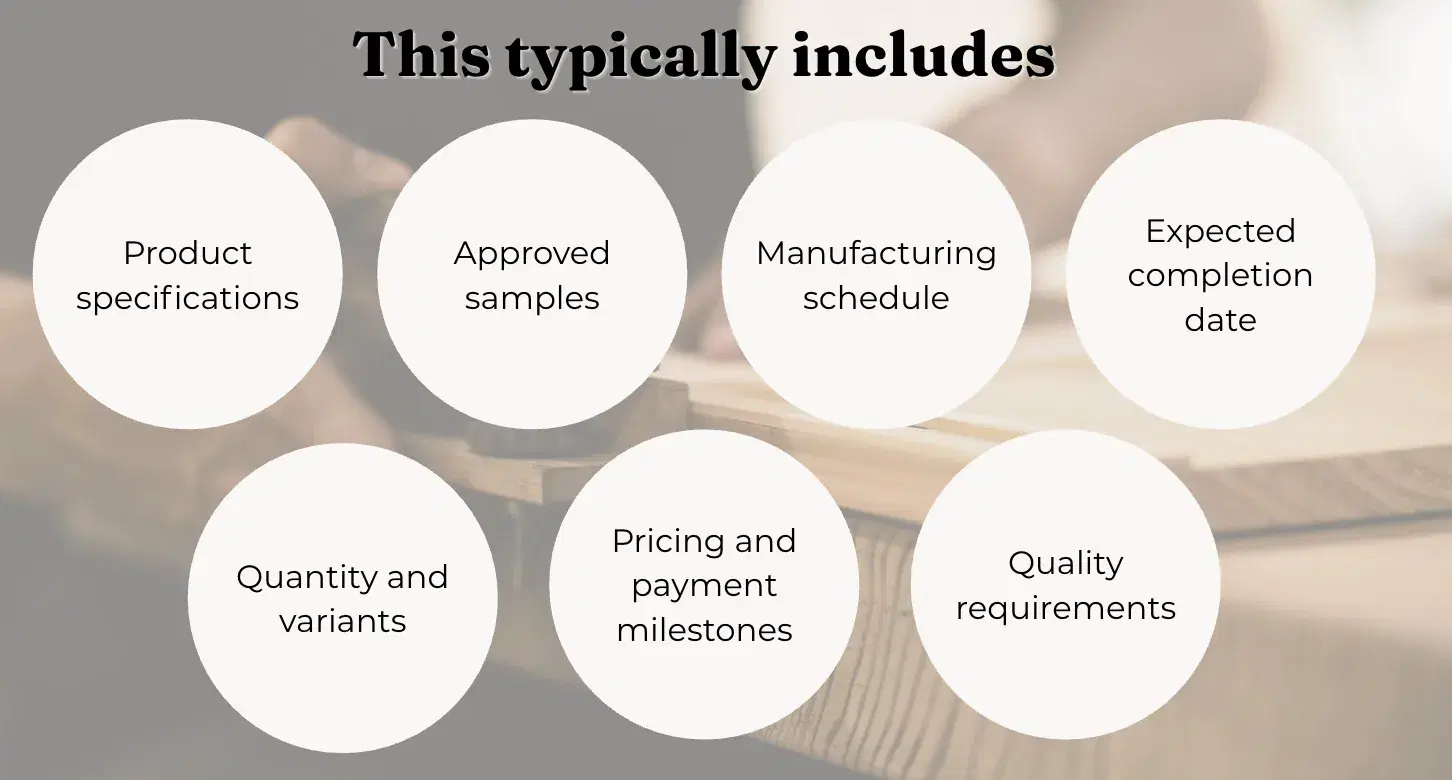
Even after an order is confirmed, production may not begin immediately.
Factories usually schedule jobs according to equipment availability, labor resources, existing commitments, and material readiness.
Planning tip: Ask for both the scheduled production start date and expected factory completion date.
Material Procurement
Manufacturers need appropriate raw materials, components, and packaging before production can proceed.
Material lead time refers to the time required to obtain these inputs.
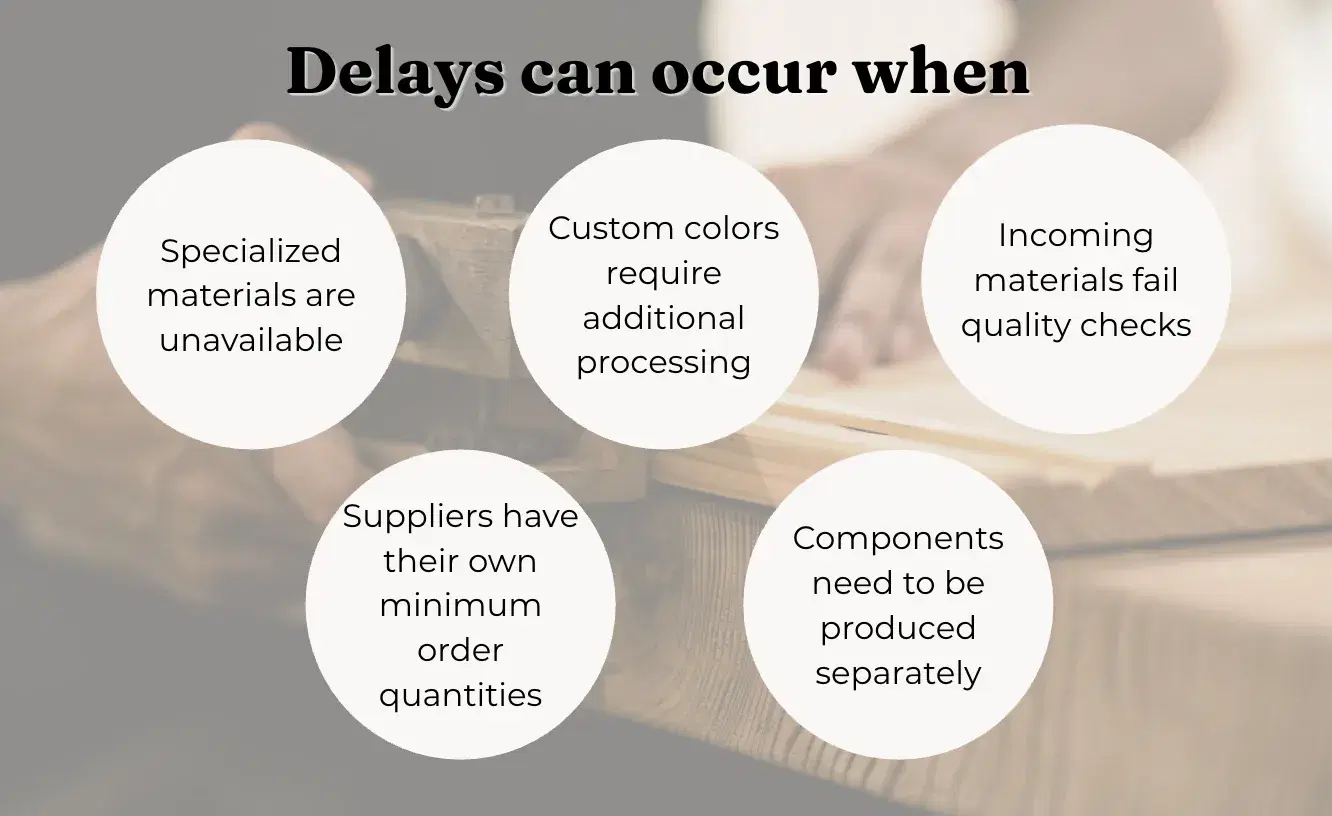
For a customized bag, production may depend on fabric, zippers, buckles, straps, lining materials, and packaging.
If one required component arrives late, the factory may be unable to complete the order on schedule.
Material availability can affect lead time even before manufacturing begins.
Production and Assembly
Once production begins, manufacturers transform materials into finished products.
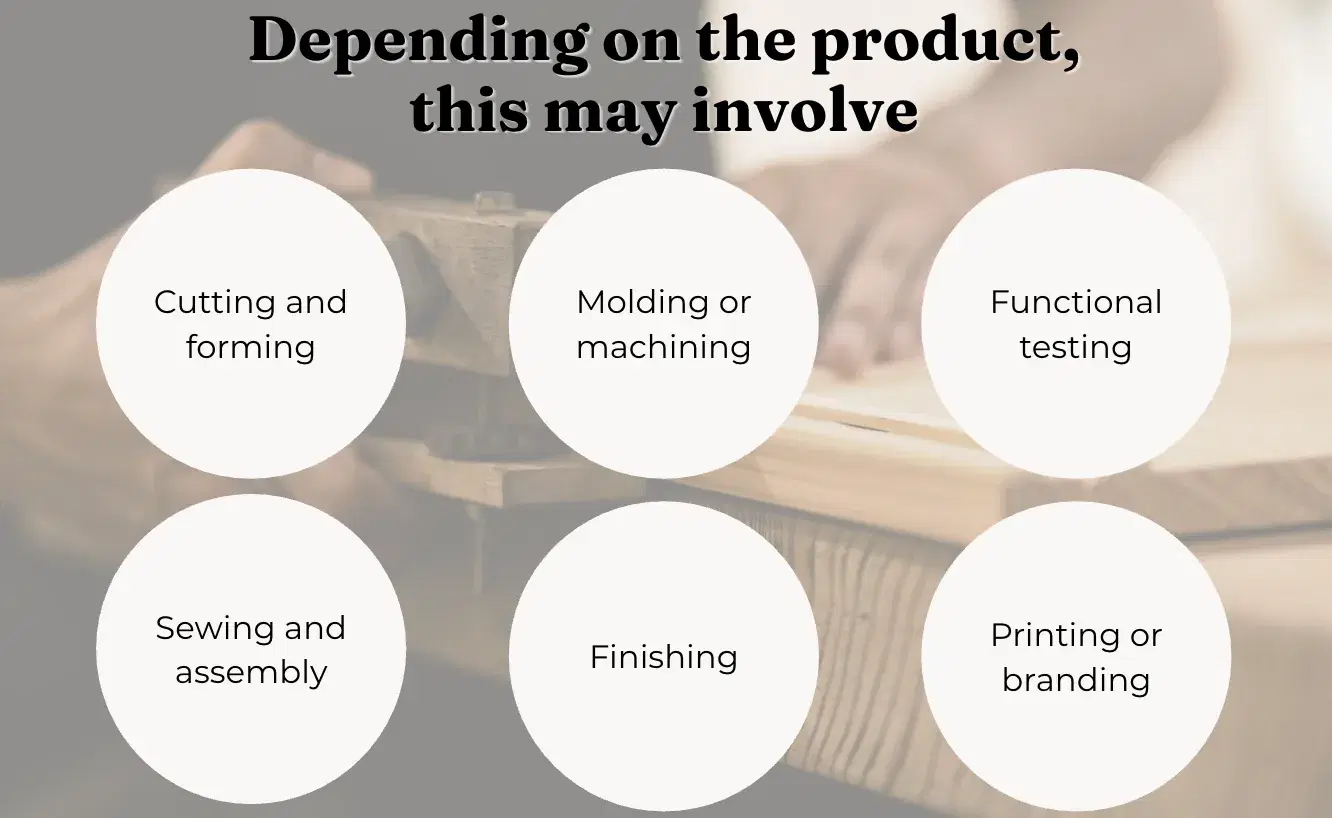
Production time depends on the number of processing steps, equipment capacity, workforce availability, and order complexity.
Factories may also need additional time for equipment setup, changeovers, or switching between product variations.
For example, producing bags in five different colors might require separate material handling and production batches compared with manufacturing a single-color design.
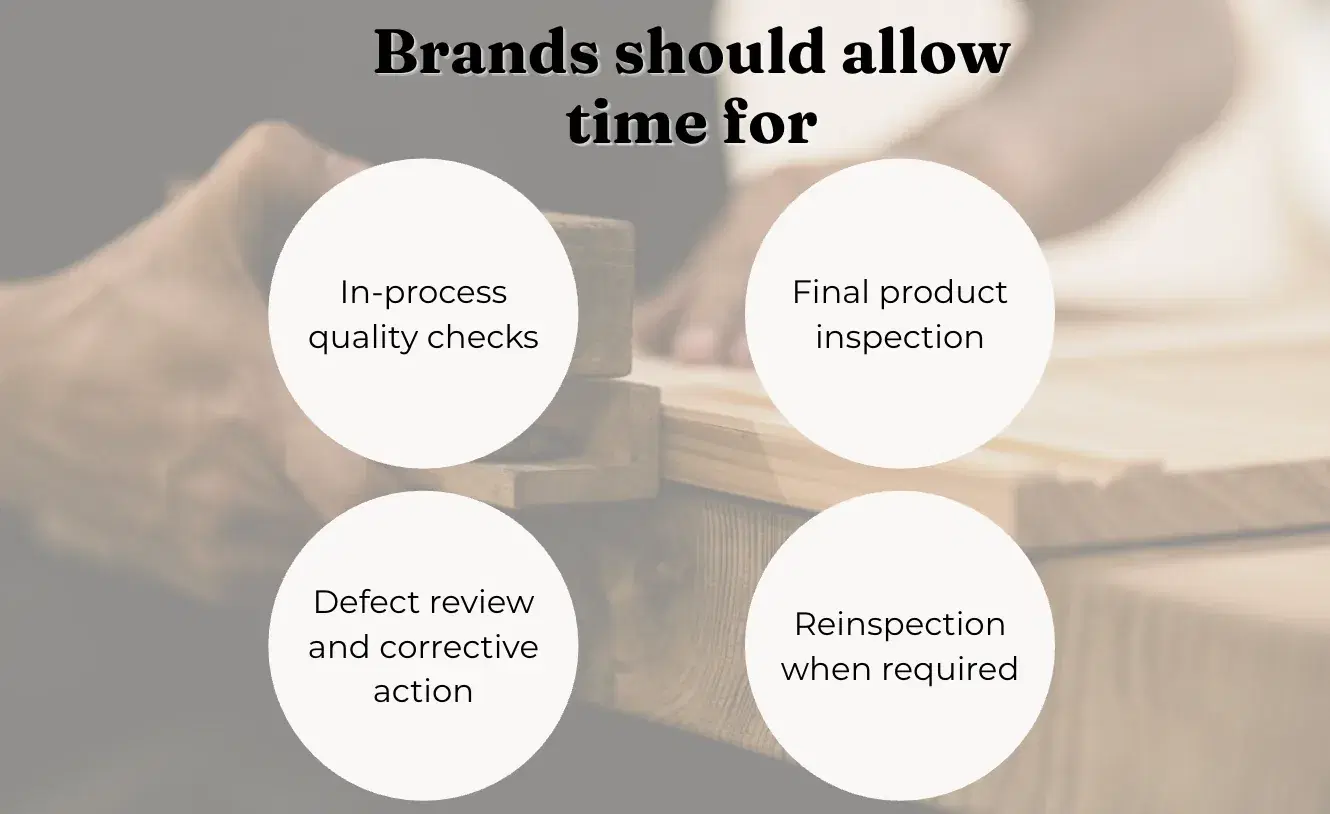
Quality Inspection and Rework
Quality checks are essential to confirm that finished products meet agreed specifications.
If defects are identified, the manufacturer may need to repair, replace, or reproduce affected products.
These corrective actions can extend the production schedule.
Packaging and Shipment Preparation
After products meet quality requirements, the factory may need to complete final packaging and prepare the goods for shipment.
Activities can include labeling, carton packing, final quantity checks, and shipping documentation.
Manufacturing completion does not necessarily mean goods are ready to leave the factory immediately.
Planning a New Product Launch?
Sourcy helps brands coordinate manufacturing requirements, supplier communication, sampling, and production milestones so you can plan your sourcing project more effectively.
How to Calculate Manufacturing Lead Time
A common method calculates manufacturing lead time by adding the time needed for order preparation, production, and post-production activities.
Manufacturing Lead Time Formula
Manufacturing lead time=Pre-production time+Production time+Post-production time
The scope of each component depends on the definition used.
For factory completion planning:
- Pre-production timeOrder preparation, material procurement, and scheduling
- Production timeManufacturing and assembly
- Post-production timeFinal inspection, finishing, and packing before factory release
This measures the order-to-factory-completion period.
If you need total order-to-delivery lead time, include outbound logistics and any additional delivery-related stages separately.
Manufacturing Lead Time Calculation Example
Imagine a brand ordering 1,000 customized tote bags.
- Order preparation and scheduling3 days
- Material procurement10 days
- Production and assembly18 days
- Quality inspection and packaging4 days
In this simplified example:
Manufacturing lead time = 3 + 10 + 18 + 4 = 35 days
The timeline assumes that stages happen sequentially. In practice, some activities may overlap.
For example, the factory may begin certain preparation activities while waiting for materials.
It is also important to clarify whether the manufacturer quotes calendar days or working days.
Key takeaway: A manufacturing lead time calculation is only reliable when the starting point, included activities, and scheduling assumptions are clear.
Manufacturing Lead Time vs. Production Lead Time vs. Cycle Time
These terms are related, but they measure different parts of the manufacturing process.
| Term | What it measures |
|---|---|
| Manufacturing lead time | Time required to complete the manufacturing order within the defined scope |
| Production lead time | Time associated with producing the order, usually from production start to completion |
| Cycle time | Time required to complete one unit or repeatable process cycle |
| Material lead time | Time needed to obtain required materials or components |
| Order-to-delivery lead time | Total elapsed time from order placement to customer receipt |
For example, a factory might spend 10 days waiting for materials and 20 days manufacturing an order.
Its production lead time may be 20 days, while its broader manufacturing lead time could be 30 days or more, depending on scheduling and inspection activities.
A cycle time of five minutes per unit does not mean 1,000 units will be ready in exactly 5,000 minutes. Actual output also depends on parallel workstations, capacity, setup time, downtime, and production scheduling.
According to Cin7’s manufacturing lead time guide, preprocessing, processing, and post-processing are useful components for understanding the total time associated with an order.
What Factors Affect Manufacturing Lead Time?
Several factors influence how quickly a factory can complete production.
Product Complexity and Customization
Customized products often require additional preparation, testing, and approvals.
New molds, unique materials, custom packaging, and complex assembly requirements can extend the timeline.
A simple logo change on an existing product may be faster than developing a product with entirely new dimensions and structural components.
Material Availability
A manufacturer cannot complete products without the necessary inputs.
Imported components, specialized materials, and supplier shortages can extend the schedule.
Whenever possible, confirm material availability before agreeing on a completion date.
Factory Capacity and Production Scheduling
A factory may have sufficient technical capability but limited available capacity.
During busy periods, production queues can delay the start of new orders.
Ask suppliers whether their quoted lead time reflects available production slots or only the time needed once manufacturing starts.
Order Quantity and Product Variations
Larger quantities, multiple SKUs, and complicated variations can increase production and inspection requirements.
The impact depends on the manufacturer’s equipment, workflow, and available resources.
Sample Revisions and Approval Delays
For custom products, bulk manufacturing often depends on final sample approval.
Each revision may require additional development, materials, and review.
Unclear specifications or repeated last-minute design changes can delay the production schedule.
Quality Problems and Rework
Manufacturing defects may require corrective action before products can be released.
Production timelines should account for reasonable inspection and correction requirements, especially for unfamiliar or complex products.
Unsure Whether a Factory’s Timeline Is Realistic?
Sourcy helps brands evaluate manufacturing requirements and coordinate production activities, making it easier to understand the steps involved in bringing a product to market.
How Can You Reduce Manufacturing Lead Time?
Reducing manufacturing lead time requires identifying avoidable delays without compromising product quality or compliance.
C4 Fabrication cut its manufacturing lead time from 14 to 8 weeks after lean production improvements, according to a NIST case study.
When sourcing custom products, discuss production capacity, material availability, and schedules with suppliers to set realistic delivery expectations.
Here are six practical approaches.
Finalize Product Specifications Early
Confirm dimensions, materials, customization, packaging, and quality requirements before production begins.
Clear specifications reduce unnecessary revisions and communication delays.
Approve Samples Before Bulk Production
An approved sample helps establish a shared reference for the final product.
Review important details before authorizing the factory to manufacture the full order.
Confirm Material Availability
Ask manufacturers whether essential materials are already available or must be ordered.
For repeat products, discuss whether materials can be reserved or planned ahead, subject to commercial agreements.
Request a Detailed Production Schedule
A useful production schedule should include major milestones such as material readiness, production start, completion, inspection, and shipment readiness.
This makes delays easier to identify and discuss before they affect the final deadline.
Plan Quality Control Throughout Production
Early quality checks can identify manufacturing issues before they affect the entire order.
Do not shorten lead time by skipping necessary inspections or product testing.
Build a Realistic Scheduling Buffer
Avoid planning a product launch solely around the factory’s most optimistic completion estimate.
Account for potential delays, quality rework, shipping arrangements, and customs processes.
For example, if the manufacturing order is expected to finish in 35 days, a brand planning a major launch should consider additional time for inspection, international transportation, and unexpected disruptions.
The appropriate buffer depends on the product, supplier reliability, transport mode, and launch deadline.
How to Plan Manufacturing Lead Time for a Product Launch
For brands ordering custom products, planning should begin with the date the inventory needs to be available for sale.
Work backward through the necessary stages.
Example: A brand needs 1,000 customized bags in its warehouse by December 1.
- Product development and sample approval14 days
- Manufacturing order35 days
- International shipping and delivery20 days
- Contingency buffer7 days
These are hypothetical durations, not industry-standard averages.
In this example, the brand would need to begin approximately 76 days before the required inventory arrival date.
The actual project schedule may differ substantially depending on the manufacturer, product requirements, shipping method, and destination.
The important distinction is that production completion and warehouse arrival are separate milestones.
What Should You Ask Manufacturers About Lead Time?
Before approving a purchase order, ask manufacturers the following questions:
These questions help distinguish a preliminary estimate from a more reliable production commitment.
A manufacturer providing a detailed schedule and clearly explaining dependencies gives buyers better information for planning.
How Sourcy Helps Brands Manage Manufacturing Timelines
Managing production involves more than receiving a lead time estimate from a factory.
Brands must coordinate specifications, sample approvals, materials, production progress, quality checks, and shipping arrangements.
Sourcy brings these sourcing activities together to help businesses move from product ideas to finished goods.
Our support includes:
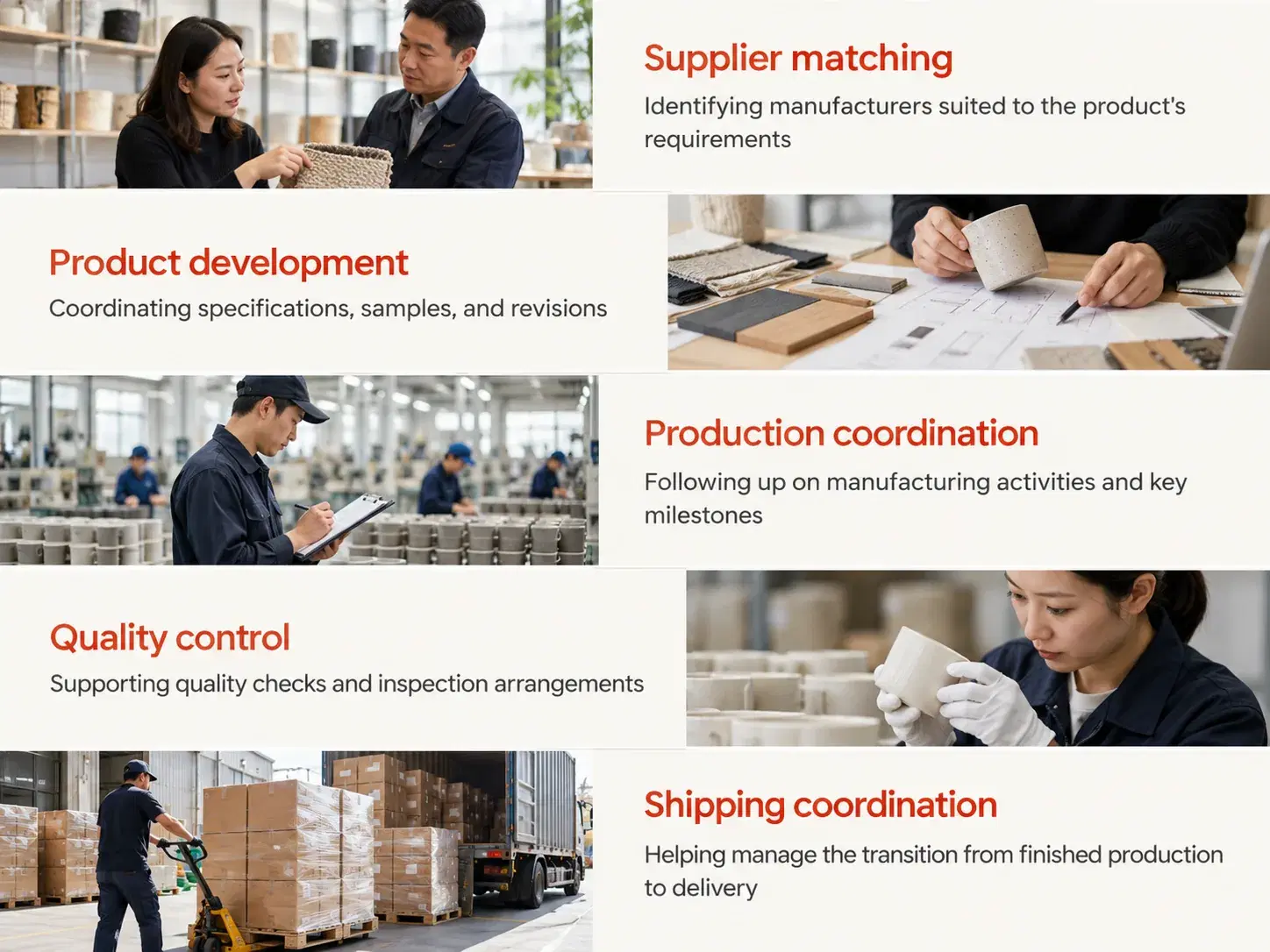
By keeping these stages connected, brands can improve visibility into their manufacturing projects and identify issues that may affect delivery schedules.
While production timelines depend on manufacturers and external conditions, clearer coordination supports more informed planning.
Need Help Planning Your Next Production Order?
From supplier selection to sampling, manufacturing coordination, and delivery, Sourcy helps brands manage the steps involved in bringing products to market.
Frequently Asked Questions About Manufacturing Lead Time
What is manufacturing lead time in simple terms?
Manufacturing lead time is the time required to complete a manufacturing order, including the relevant preparation, production, and finishing activities. Its exact scope depends on the definition used.
What is the difference between manufacturing lead time and production lead time?
Production lead time generally focuses on the actual manufacturing period, while manufacturing lead time may also include material procurement, order preparation, and post-production activities.
How do you calculate manufacturing lead time?
Add the durations of the stages included in your defined manufacturing process, such as pre-production, production, and post-production. Account for overlapping activities rather than automatically adding every task’s duration.
Does manufacturing lead time include shipping?
Not always. Some businesses use lead time to describe the full order-to-delivery process, while others use manufacturing lead time to describe only the period before factory completion. Confirm the definition with your supplier.
Why do manufacturing lead times increase?
Common causes include material shortages, limited factory capacity, complex customization, sample revisions, production defects, and changes to order specifications.
How can businesses reduce production delays?
Finalize specifications early, confirm material availability, approve samples, request realistic production schedules, maintain clear communication, and use appropriate quality-control checkpoints.
Is manufacturing lead time the same as cycle time?
No. Cycle time typically measures how long a production unit or repeated process takes, while manufacturing lead time measures a broader elapsed period associated with completing an order.
Final Thoughts: Plan Beyond the Production Date
Manufacturing lead time directly affects product launch schedules, inventory planning, and customer delivery expectations.
By understanding material procurement, production scheduling, manufacturing processes, quality inspections, and shipment preparation, brands can develop more realistic timelines.
The goal is not always to find the manufacturer promising the shortest production time.
It is to work with a manufacturer that can deliver the required products, quality, and quantities within a realistic schedule.
Turn Your Product Plan Into Reality
Sourcy helps brands navigate product development, supplier sourcing, manufacturing coordination, quality requirements, and delivery through one connected sourcing experience.