How to Find the Manufacturer of a Product: A Step-by-Step Guide
Sourcing Guide · 10 min read

To find the manufacturer of a product, search supplier directories, B2B platforms, or use reverse image search. Then, verify potential manufacturers, request samples, and compare pricing, quality, and production terms before making a decision.
If you’re identifying the manufacturer behind an existing product, checking labels, packaging, and trade records can help narrow your search.
Whether you’re developing a new product or researching an existing one, this guide walks you through seven practical steps to find and evaluate reliable manufacturers.
Rather skip the research, vetting, and back-and-forth? Share your product idea and Sourcy will find and manage the right manufacturer for you.
Find a Manufacturer With SourcyWhat Is a Product Manufacturer?
A product manufacturer is a company that transforms raw materials, components, or designs into finished products.
However, not every company selling products is the actual manufacturer.
Manufacturer vs. Supplier vs. Trading Company
| Type | What They Do | Best For |
|---|---|---|
| Manufacturer | Produces physical products using manufacturing facilities and equipment | Custom product development and production |
| Supplier | Provides products or materials but may not manufacture them | Product sourcing and purchasing |
| Trading company | Sources products from manufacturers and resells them | Accessing multiple products or factories |
Understanding these differences helps you identify who actually produces your product.
How to Find Out Who Manufactures an Existing Product
If you’ve discovered a product you want to source, your first question might be:
Who actually manufactures this product?
Although the brand name may be easy to identify, the company producing the product is not always the same as the company selling it.
Here are four ways to investigate.
Check Product Labels and Packaging
Start by examining the information available on the physical product.
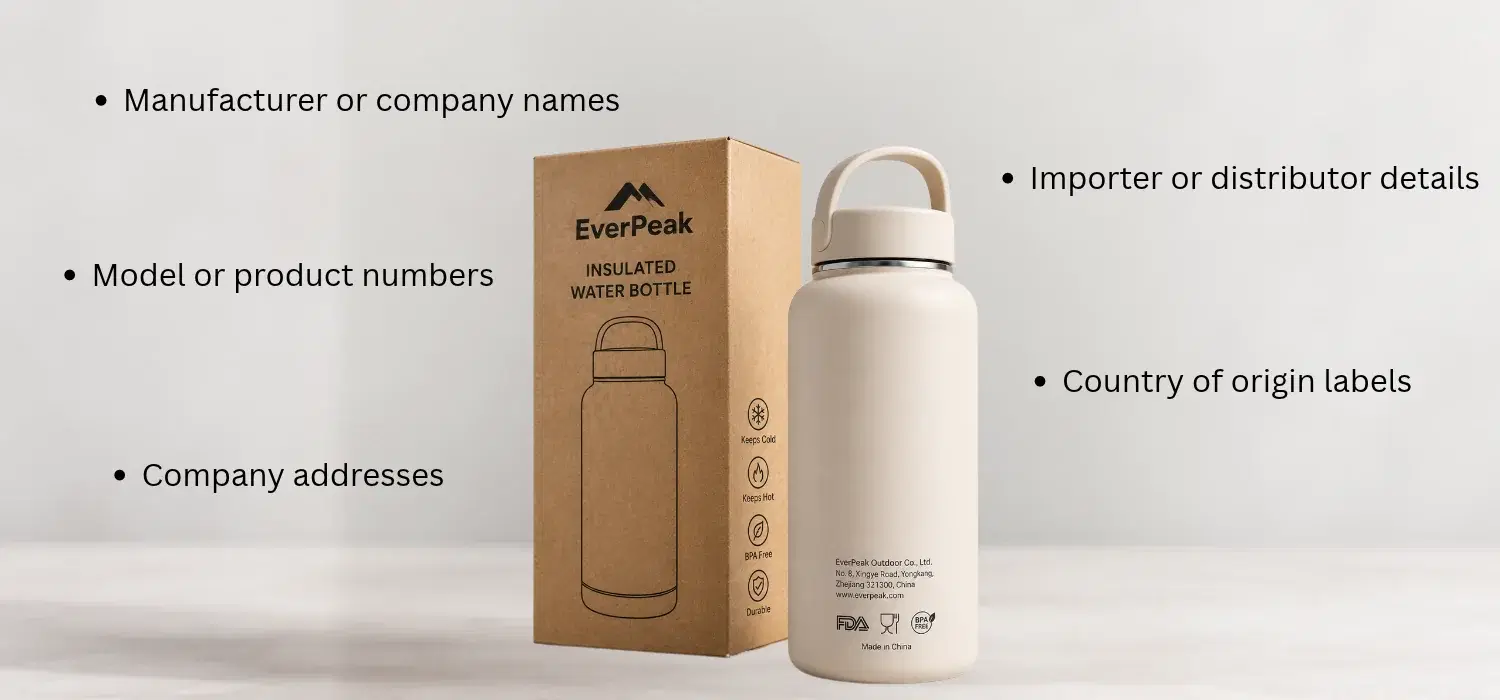
Product labels may reveal manufacturer names, model numbers, company addresses, or country-of-origin information.
However, the company listed may be the brand owner, importer, or distributor rather than the actual factory.
Use Reverse Image Search
If you have an image of the product, reverse image search can help you discover similar listings across different platforms.
Tools such as Google Lens and image search functions on sourcing marketplaces can help identify products with similar designs.
This approach is useful when:
- You don’t know the product’s exact name
- You found the product on an e-commerce marketplace
- You want to identify suppliers offering similar products
- You’re exploring potential manufacturing alternatives
Keep in mind that identical product images do not necessarily mean the products originate from the same factory.
Research Supplier Directories and Manufacturing Records
Online supplier directories and publicly available trade records can help you identify companies associated with a particular product category.
Try searching for specific product descriptions rather than broad keywords.
- Custom pickleball bag manufacturer
- OEM sports bag factory
- Waterproof nylon bag manufacturer
More specific terms can help narrow your search to manufacturers with relevant production capabilities.
Public shipment records may also reveal potential supplier relationships, although they do not always identify the actual manufacturing facility.
Contact the Brand or Supplier
Sometimes, the simplest approach is to ask.
Contact the brand owner or distributor to ask about manufacturing or wholesale partnerships.
Some brands keep their factory relationships confidential. If the original manufacturer cannot be identified, consider finding an alternative factory with similar capabilities.
How to Find a Manufacturer for Your Product: 7 Steps
If you’re developing your own product, a structured sourcing process can help you identify suitable manufacturers and avoid common mistakes.
The 7 steps at a glance
- Define your product requirementsWrite a clear brief: materials, dimensions, quantity, branding, and target price.
- Choose the right manufacturing modelDecide between OEM, ODM, or private label based on how much customization you need.
- Search for potential manufacturersUse B2B platforms, trade shows, search engines, or a sourcing platform.
- Verify the manufacturer’s credibilityCheck business registration, production capabilities, certifications, and communication.
- Request samples and evaluate qualityTest samples in real use and approve one as your quality reference.
- Compare MOQs, pricing, and lead timesQuote on identical specs and compare total landed cost, not just unit price.
- Confirm production termsDocument specs, payment, timelines, inspections, and shipping before you order.
Define Your Product Requirements
Before contacting manufacturers, prepare a clear product brief.
Detailed specifications help factories assess production feasibility and provide more accurate quotations.
Your brief should include:
- Product type, materials, and dimensions
- Design references and customization requirements
- Branding and packaging preferences
- Estimated order quantity and target price
- Target market and relevant compliance requirements
Example: Finding a Manufacturer for a Custom Pickleball Bag
Instead of asking a manufacturer, “Can you make a sports bag?”, prepare a detailed product brief.
| Requirement | Example Specification |
|---|---|
| Product | Custom pickleball backpack |
| Material | 900D Oxford fabric |
| Features | Paddle compartment, shoe pocket, water-resistant lining |
| Branding | Embroidered logo |
| Colors | Black and beige |
| Quantity | Initial target of 200 units |
| Packaging | Individual branded polybags |
| Target market | United States |
These are illustrative specifications. Production feasibility and MOQ must be confirmed with manufacturers.
The more clearly you define your requirements, the easier it becomes to compare manufacturers fairly.
Choose the Right Manufacturing Model
Before searching, determine how much product customization you need.
OEM manufacturing is suitable for products built to your specifications, while ODM and private label options may offer existing designs that can be customized.
Choosing the right model helps you find factories with the capabilities your product requires.
Search for Potential Manufacturers
Once your product requirements are clear, start researching potential manufacturing partners.
There are several ways to find manufacturers.
B2B Manufacturing Platforms
Search suppliers, compare capabilities, and request quotations online.
- Alibaba
- Global Sources
- Made-in-China
- Thomasnet
- 1688
Industry Trade Shows
Meet suppliers in person at events such as the Canton Fair.
Search Engines and Industry Directories
Search by product, material, or region.
- OEM bag manufacturer Vietnam
- Custom skincare manufacturer USA
Professional Sourcing Platforms
Platforms such as Sourcy match manufacturers to your product requirements.
Need Help Finding the Right Manufacturer?
Skip the uncertainty of comparing suppliers on your own.
Sourcy helps brands identify suitable manufacturing options based on their product requirements.
Verify the Manufacturer’s Credibility
Before selecting a manufacturer, verify its business identity, production capabilities, compliance, and reliability.
According to Tacton’s 2026 Industrial Buyer Expectations Report, 43% of surveyed industrial buyers identified fewer disruptions from incorrect or late deliveries as the most important business outcome influencing supplier evaluation.
Source: TactonBusiness Registration
Verify the company’s legal name and registration details using official records where possible.
Manufacturing Capabilities
Request factory photos, equipment details, production experience, or a factory audit. Confirm whether production is handled in-house or subcontracted.
Certifications and Compliance
Check that the manufacturer meets relevant product safety, quality, and regulatory requirements.
Communication
Assess whether the supplier responds clearly, consistently, and transparently.
Supplier verification should continue throughout sampling, production, and quality control.
Request Samples and Evaluate Product Quality
Before placing a bulk order, request samples to confirm whether the manufacturer can meet your product specifications and quality expectations.
Depending on your requirements, you may receive:
- Existing product samples
- Customized samples
- Pre-production samples
For example, when manufacturing a pickleball bag, check:
Materials
Fabric durability and stitching quality
Functionality
Zippers, compartments, and strap comfort
Appearance
Overall construction, logo placement, and branding accuracy
Test the product in real-world conditions, as a bag that looks good in photos may be uncomfortable when fully loaded.
If the sample doesn’t meet your expectations, provide specific feedback and request revisions before approving production.
Keep the approved sample as a reference for future quality inspections.
Remember: An approved sample doesn’t guarantee consistent quality across bulk production, so ongoing quality checks are still important.
Compare MOQs, Pricing, and Lead Times
Once you’ve shortlisted potential manufacturers, request quotations based on identical product specifications.
This makes comparing suppliers easier and more accurate.
Focus on the following factors:
| Factor | Why It Matters |
|---|---|
| Unit price | Determines the base manufacturing cost |
| Minimum order quantity (MOQ) | Affects initial investment and inventory requirements |
| Sample cost | Covers product evaluation and development |
| Tooling cost | May apply to molds, custom components, or specialized equipment |
| Production lead time | Impacts launch timelines and inventory planning |
| Payment terms | Affects cash flow and financial exposure |
| Shipping terms | Clarifies logistics responsibilities and expenses |
Why MOQ Matters
Minimum order quantity (MOQ) is the smallest quantity a manufacturer is generally willing to produce or sell.
MOQ requirements vary depending on materials, product complexity, and customization.
For smaller brands, a high MOQ can increase upfront investment and inventory risk.
Don’t Compare Manufacturing Costs Based on Unit Price Alone
A manufacturer’s quotation may exclude costs such as:
- Packaging
- Quality inspections
- Freight
- Insurance
- Import duties
- Warehousing
of companies saw supplier and material costs rise due to new tariffs, according to McKinsey’s 2025 Supply Chain Risk Survey.
Source: McKinsey — Supply Chain Risk Pulse 2025Comparing Multiple Manufacturers?
Find the right balance between cost, quality, and manufacturing capabilities.
Sourcy helps brands evaluate manufacturing options based on their product and production requirements.
Confirm Production Terms Before Placing an Order
Once you’ve selected a manufacturer, confirm all production details before making a financial commitment.
Important details include:
- Approved product specifications
- Final sample reference
- Confirmed order quantity
- Unit price and additional charges
- Payment schedule
- Production timeline
- Quality acceptance criteria
- Inspection arrangements
- Shipping responsibilities
- Procedures for defects and delays
- Intellectual property and tooling ownership, where applicable
These terms should be documented in the purchase order and relevant manufacturing agreements.
A successful manufacturing relationship starts with clear expectations before production, not just communication when problems arise.
The right manufacturer isn’t necessarily the cheapest or largest factory. It’s the one whose capabilities, reliability, and production terms best match your business needs.
Common Mistakes to Avoid When Finding a Manufacturer
Even experienced businesses encounter challenges during the sourcing process.
Here are five common mistakes to avoid.
Choosing a Manufacturer Based Only on Price
Low quotations may seem attractive, especially when launching a new product.
However, unusually low pricing can reflect differences in material quality, production standards, or included services.
Always check what the quotation covers before comparing suppliers.
Not Providing Clear Product Specifications
Without detailed specifications, manufacturers may interpret your requirements differently.
This can result in products that don’t match your expectations.
Provide clear measurements, material requirements, reference images, and technical details wherever possible.
Skipping Supplier Verification
An impressive product catalog or professional website doesn’t necessarily prove that a supplier has manufacturing capabilities.
Verify business information, production experience, and relevant facilities before committing.
Approving Bulk Production Without Testing Samples
Products may look good in photos but perform differently in real-world use.
Sampling is especially important for customized products involving specific materials, dimensions, or functional requirements.
Ignoring Production and Shipping Risks
Manufacturing doesn’t end when the factory completes production.
Delays, quality problems, packaging issues, and shipping complications can affect your product launch.
Establish production checkpoints, quality control arrangements, and clear shipping responsibilities in advance.
Should You Work Directly With a Manufacturer or Use a Sourcing Partner?
Finding a manufacturer is only the first step. Businesses also need to evaluate suppliers, review samples, coordinate production, and manage quality control.
Whether you work directly with a manufacturer or use a sourcing partner depends on your sourcing experience, resources, and product complexity.
| Factor | Direct Manufacturer | Sourcing Partner |
|---|---|---|
| Supplier search | Managed by your business | Helps identify suitable manufacturers |
| Supplier evaluation | Requires internal research | Supports supplier screening |
| Sample coordination | Managed directly | Assists with development and revisions |
| Production follow-up | Requires ongoing communication | Coordinates production progress |
| Quality control | Arranged by your team | Helps organize inspections |
| Shipping | Managed by your business | Supports logistics coordination |
| Best suited for | Businesses with established sourcing capabilities | Brands seeking end-to-end sourcing support |
Working directly with a manufacturer provides greater control over supplier relationships but requires time and expertise to manage each stage.
A sourcing partner can simplify the process by coordinating multiple stages of product sourcing and manufacturing.
How Sourcy Can Help
Sourcy is an AI-powered global sourcing platform that helps brands find suitable manufacturers and manage the journey from product idea to production.
From manufacturer sourcing and product development to sampling, quality control, and shipping coordination, Sourcy brings these processes together into one sourcing solution.
The goal is to turn your product idea into a finished product with less sourcing complexity.
Ready to Find the Right Manufacturer?
From supplier search to production, Sourcy helps simplify the process of bringing your product to market.
Frequently Asked Questions About Finding a Manufacturer
How do I find the manufacturer of a specific product?
Start by examining the product label, packaging, model number, and brand information. You can also use reverse image search, supplier directories, and publicly available import records to investigate potential manufacturers.
Keep in mind that the brand selling a product and the factory producing it may be different companies.
Can I find a manufacturer without having a finished product design?
Yes. Some manufacturers offer existing product designs, ODM development, or private label products that can be customized.
If you’re developing a new concept, reference images and a clear description of your requirements can help manufacturers assess feasibility.
How much does it cost to manufacture a product?
Manufacturing costs depend on materials, product complexity, order quantity, customization, tooling, labor, and production location.
To estimate your costs accurately, request quotations based on detailed specifications and include additional expenses such as sampling, quality inspections, shipping, and import duties.
What is the minimum order quantity for manufacturers?
There is no universal MOQ.
Minimum order quantities vary based on the product category, manufacturing process, materials, and customization requirements.
Some manufacturers support smaller production runs, while others require larger quantities to make production economically viable.
How can I verify whether a manufacturer is legitimate?
Review the company’s business registration, manufacturing experience, production capabilities, and relevant certifications.
Request samples and consider arranging a factory audit or third-party inspection when appropriate.
Verify important documentation independently rather than relying solely on supplier claims.
Is it better to manufacture locally or overseas?
Both options have advantages.
Local manufacturing may simplify communication, factory visits, and logistics arrangements.
Overseas manufacturing may offer access to specialized production capabilities, different material suppliers, or competitive pricing.
Compare total landed costs, product requirements, lead times, regulatory compliance, and supply chain risks before deciding.
Finding the Right Manufacturer Starts With the Right Process
Finding a manufacturer takes more than searching directories or comparing quotes. It means defining your requirements, verifying capabilities, evaluating samples, and setting clear production terms.
Sourcy helps simplify that journey, from finding the right manufacturer to product development and production, so you can spend more time building your brand.