
China vs India Manufacturing: Costs, Capabilities & Sourcing
Supply Chain Trends & Intelligence · 8 min read
China vs India manufacturing is not simply a question of which country offers lower labor costs. China has a much larger manufacturing base and extensive supplier ecosystems, while India offers established capabilities in selected sectors and alternative manufacturing opportunities.
For international buyers, the better choice depends on product complexity, supplier capabilities, total delivered costs, production timelines, and quality requirements.
This guide compares manufacturing in China and India to help businesses evaluate suitable sourcing options.
Comparing Manufacturing Options in China and India?
Sourcy helps businesses explore international sourcing options, evaluate suppliers, and compare manufacturing requirements based on their product needs.
China vs India Manufacturing: Quick Comparison
China and India have different manufacturing ecosystems, strengths, and operational considerations.
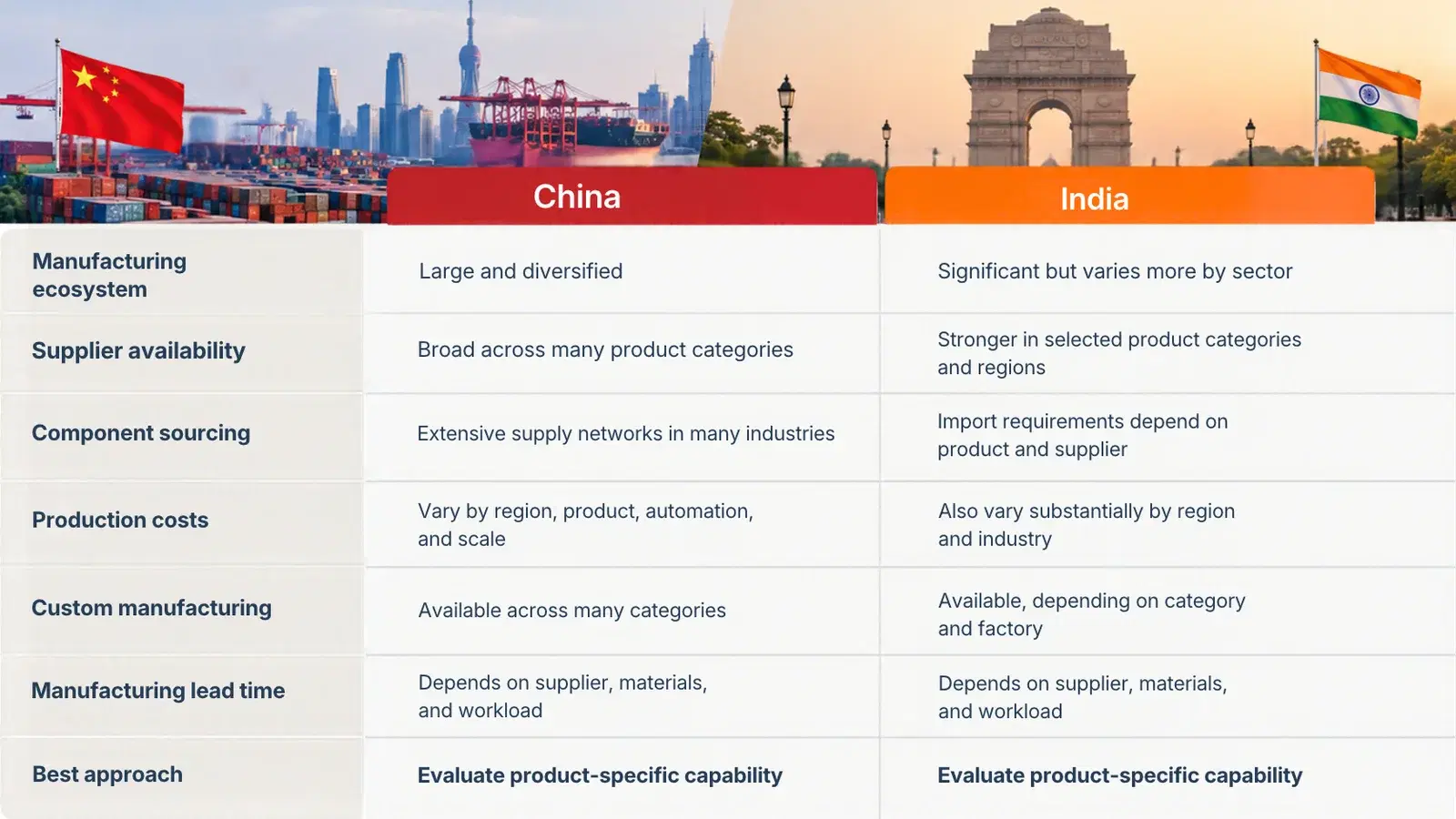
These are general sourcing considerations, not universal rankings. Individual factories may perform very differently from their national averages.
How Large Are China's and India's Manufacturing Industries?
Manufacturing output helps illustrate the difference in industrial scale.
According to the World Bank's manufacturing value-added indicator, the following estimates apply for 2025:
- China≈ $4.82 TrillionChina's manufacturing value added was approximately US$4.82 trillion in 2025.
- India≈ $533 BillionIndia's manufacturing value added was approximately US$533 billion in 2025.
These figures measure manufacturing value added, not export revenue, factory capacity available to foreign buyers, or the quality of individual suppliers.
China's much larger manufacturing economy suggests a broader overall industrial base, but it does not mean Chinese suppliers will always provide better prices or quality for every product.
Likewise, India's smaller manufacturing sector does not mean Indian factories cannot compete effectively in specific industries.
Which Country Is Better for Different Product Categories?
Country selection should start with the actual product rather than a general ranking.
Electronics and Complex Consumer Products
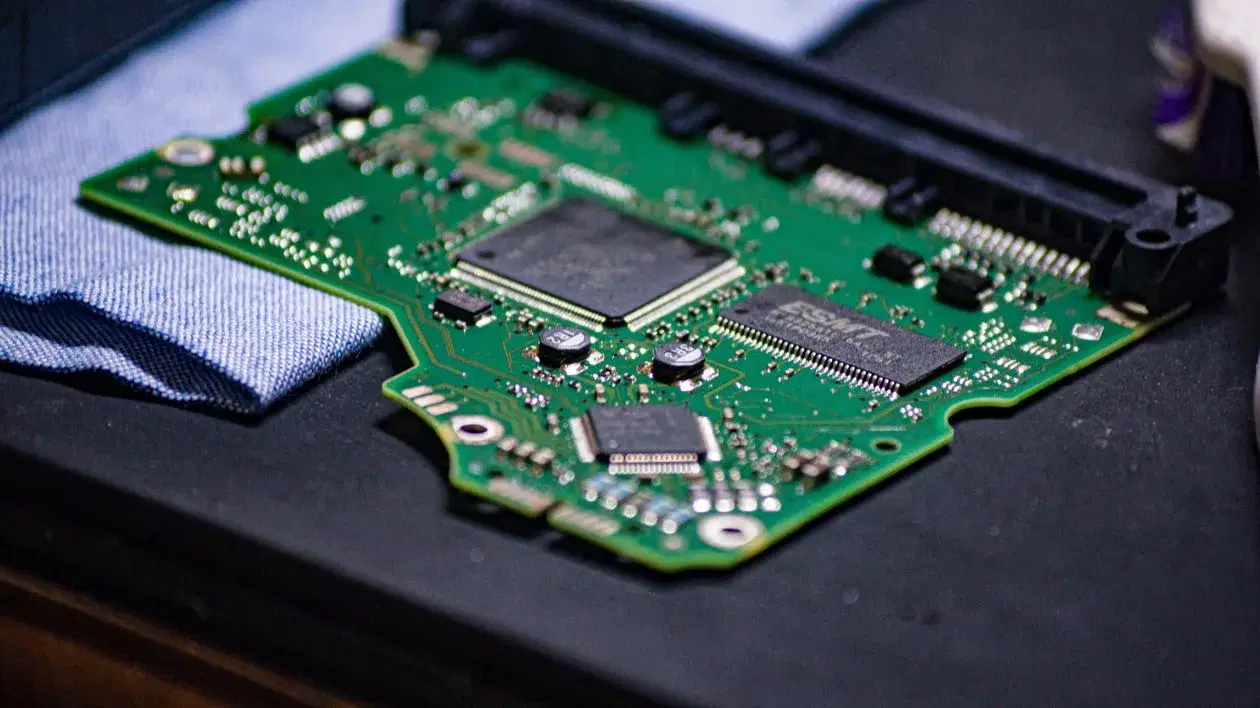
China has an extensive manufacturing ecosystem across numerous electronics and component categories.
For products requiring multiple specialized components, supplier proximity and production coordination can be important advantages.
However, businesses must still verify the specific factory's capabilities, testing arrangements, and intellectual property safeguards.
India also has electronics manufacturing capabilities, and supplier suitability should be evaluated by product type and component requirements.
Textiles and Apparel

Both countries offer textile and apparel manufacturing capabilities.
When comparing suppliers, examine
- Fabric availability
- Dyeing and finishing processes
- Stitching quality
- Production capacity
- Minimum order quantities
- Manufacturing lead times
The most appropriate sourcing location may depend on whether the buyer needs basic garments, specialized fabrics, technical textiles, or custom-designed products.
Home and Lifestyle Products

Home and lifestyle manufacturing covers a wide range of materials and processes.
Relevant products may include home textiles, decorative products, kitchen accessories, and selected consumer goods.
Rather than assuming one country is better for the entire category, evaluate manufacturers based on materials, production processes, and product specifications.
Custom Packaging and Promotional Products

Packaging and promotional merchandise often involve printing, material sourcing, product customization, and assembly.
Both countries may offer suitable manufacturing options depending on the product.
Key takeaway: For customized products, confirm whether the factory can complete all required processes or relies on subcontractors.
Not Sure Which Country Is Right for Your Product?
Different product categories require different manufacturing capabilities.
Explore country-specific supplier options through Sourcy.
Manufacturing Costs: Is China or India Cheaper?
Neither country is automatically cheaper. Although labor costs influence manufacturing prices, the final cost also depends on material availability, production efficiency, order quantities, and logistics.
| Cost Factor | What Buyers Should Compare |
|---|---|
| Materials | Local availability versus imported components |
| Production | Factory efficiency, automation, and manufacturing complexity |
| MOQ | Minimum order requirements and pricing at different quantities |
| Logistics | Freight, duties, insurance, and delivery costs |
A lower factory quotation does not always mean a lower total purchasing cost.
Example: Comparing Total Manufacturing Costs
Imagine a business sourcing 2,000 customized products from two qualified manufacturers.
| Cost Component | Supplier A | Supplier B |
|---|---|---|
| Manufacturing | $8,000 | $7,400 |
| Shipping | $1,000 | $1,500 |
| Other applicable landed costs | $800 | $1,000 |
| Total estimated cost | $9,800 | $9,900 |
The following costs are hypothetical and do not represent current manufacturing prices in China or India.
In this example, Supplier B has a lower manufacturing quotation but a higher total cost.
The point is not that one country is cheaper. It is that procurement decisions should consider complete and comparable cost estimates.
The same comparison should also account for quality, order requirements, and delivery timelines.
Need to Compare Manufacturing Quotations?
A lower factory price may not result in a lower delivered cost.
Explore manufacturing options with Sourcy and compare supplier requirements before committing to production.
China vs India Manufacturing Lead Times
Manufacturing lead times in China and India depend on product complexity, material availability, supplier capacity, and customization requirements. Neither country is consistently faster across every product category.
| Factor | China | India |
|---|---|---|
| Component availability | Extensive domestic supplier networks in many sectors | May require imported components for certain products |
| Production scheduling | Depends on factory workload and order complexity | Depends on factory workload and order complexity |
| Customization | Broad capabilities, depending on manufacturer | Capabilities vary by product and supplier |
| International delivery | Depends on destination and shipping method | Depends on destination and shipping method |
Key takeaway: Compare factory completion dates and estimated delivery timelines using the same product specifications and shipping destination.
How to Compare Manufacturers in China and India
When comparing suppliers across both countries, evaluate factors that directly affect your product requirements.
| What to Compare | Questions to Ask |
|---|---|
| Local supply chain | Are essential raw materials and components sourced locally or imported? |
| Manufacturing capabilities | Can the factory complete all required processes, or does it rely on subcontractors? |
| Production capacity | Can the supplier meet your target quantity and delivery schedule? |
| Total delivered cost | Are quotations based on the same specifications and shipping terms? |
| Quality and compliance | Can the supplier provide relevant test reports and destination-market documentation? |
Request comparable quotations and samples before selecting a manufacturer.
China vs India Manufacturing: Which Should You Choose?
Consider China when
Your product requires multiple specialized components, a broad supplier network, or complex manufacturing processes.
Consider India when
Your product aligns with established Indian manufacturing capabilities, particularly in selected textile, apparel, and home product categories.
Compare both when
You want to diversify suppliers, evaluate production costs, or reduce reliance on a single manufacturing location.
Bottom line: Choose based on verified factory capabilities, total delivered costs, quality requirements, and realistic lead times—not country reputation alone.
How Sourcy Helps You Compare Manufacturing Options
Choosing between China and India requires more than comparing country-level manufacturing costs. Businesses need qualified suppliers, comparable quotations, and reliable production information.
Sourcy supports businesses through supplier discovery, supplier evaluation, quotation comparison, sampling coordination, and production follow-up.
By evaluating manufacturing options against consistent product requirements, businesses can make more informed decisions based on cost, quality, and production capabilities.
Ready to Compare Manufacturing Options?
Share your product specifications, target quantity, budget, and delivery requirements to explore suitable manufacturers through Sourcy.
Frequently Asked Questions
Is China or India better for manufacturing?
Neither is universally better. The most suitable country depends on your product category, required manufacturing capabilities, order volume, quality requirements, and total purchasing costs.
Is manufacturing cheaper in India than China?
Not necessarily. Manufacturing costs depend on raw materials, labor, production efficiency, factory capacity, and logistics. Compare written quotations from qualified suppliers using the same specifications.
Which country has a larger manufacturing industry?
China has a substantially larger manufacturing sector based on World Bank manufacturing value-added data. This indicates overall industry scale rather than the quality of every supplier.
Can I manufacture private label products in China and India?
Yes. Private label and custom manufacturing opportunities exist in both countries, although specific product capabilities and commercial requirements vary by supplier.
How do I compare manufacturers in different countries?
Use consistent product specifications and compare manufacturing capability, MOQ, samples, quality documentation, total delivered costs, and production timelines.
Final Thoughts
China and India offer different manufacturing opportunities, but the right decision depends on your product and commercial requirements.
A reliable supplier with competitive total costs, suitable production capabilities, and consistent quality may matter more than the manufacturing country alone.
Ready to Find the Right Manufacturing Partner?
Compare international sourcing options based on your product specifications, budget, and production goals.